
Table of Contents
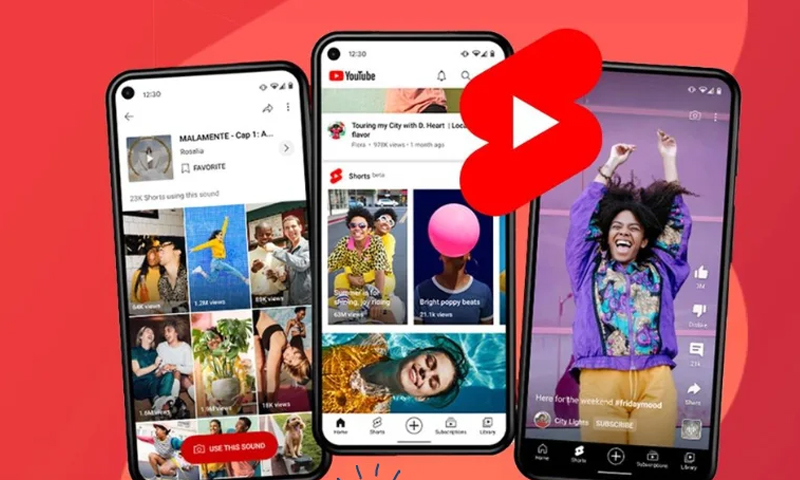
In a major development for short-form content creators, YouTube CEO Neal Mohan has officially announced that Google’s Veo 3 AI video generation model will be integrated into YouTube Shorts later this summer. The move signals YouTube’s most significant step yet into AI-powered video creation, and it could reshape the way Shorts are produced and consumed.
This comes as YouTube Shorts continues its explosive growth, with creators and audiences alike increasingly shifting toward vertical, quick-fire content formats.
YouTube Shorts Sees Explosive 186% Growth
YouTube Shorts, introduced globally in 2021, has rapidly evolved into a formidable player in the short-form video space, competing with platforms like TikTok and Instagram Reels.
Mohan highlighted that Shorts are now generating an average of 200 billion daily views, marking a 186% year-over-year increase. This growth significantly outpaces other segments of YouTube, despite the platform’s continued status as the world’s most-watched video destination.
This surge in demand has created a need for more sophisticated creation tools, and YouTube appears poised to meet that need through the integration of Veo 3.
What Is Veo 3 and Why Does It Matter?
Veo 3 is Google DeepMind’s most advanced AI video generation model to date. Capable of turning text or image prompts into cohesive short video clips, it represents a leap in generative AI’s ability to handle movement, scene continuity, and visual fidelity.
Previously, YouTube’s AI toolkit for Shorts included Dream Screen, which allowed creators to generate visual backgrounds from prompts. Veo 3 will take this to the next level by enabling full video generation, potentially allowing users to create entire Shorts without filming any footage themselves.
“This is not just about visuals anymore—it’s about giving creators narrative tools powered by AI,” said a Google spokesperson.
Current Limitations: Landscape Format and 720p Resolution
Despite its promise, Veo 3 currently outputs videos in 720p resolution and a landscape (horizontal) format—which does not align with the vertical nature of YouTube Shorts. Creators typically use a 9:16 portrait ratio for Shorts, so a new output configuration or upgrade to Veo’s architecture will be needed for seamless integration.
Mohan did not confirm whether a portrait-format version of Veo 3 is in the works. However, with Shorts being the primary destination for the integration, it is likely that such a development will follow or be announced soon.
Access: Will Veo 3 on Shorts Be Free?
As of now, Veo 3 is accessible only through Google’s AI Ultra plan, a premium subscription that costs $250 per month. This plan allows users to generate up to 125 eight-second videos each month—translating to about 16 minutes of generated content.
Mohan did not specify whether the integration of Veo 3 into YouTube Shorts will be made freely available to all creators, or whether it will follow a similar pay-to-access model under YouTube’s Creator Tools.
The lack of detail leaves room for speculation:
- Free version for all creators could democratize AI-powered video creation.
- Premium or limited access might restrict Veo 3 to top-tier influencers and agencies.
Either way, creators will be watching closely to understand how they can tap into this powerful tool without facing cost barriers.
A Potential Game-Changer for Creators
If successfully integrated, Veo 3 could drastically reduce the time and effort needed to produce engaging, high-quality Shorts. Content creators could use text prompts to develop entire narratives, enhance visual storytelling, or even simulate real-life video scenarios—all without touching a camera.
This may benefit:
- Small creators with limited resources
- Educators and explainer channels
- Entertainment accounts looking to scale output
- Brands aiming for visual storytelling with minimal production costs
It also opens up ethical and creative conversations about originality, synthetic content, and attribution, especially in a platform like YouTube where authenticity and personality are core to user engagement.
Competitive Implications for the Creator Economy
By offering advanced generative tools directly within its app, YouTube is positioning itself to compete aggressively with TikTok’s AI filters, Meta’s generative features, and third-party apps like Runway and Pika.
PTA Celebrates 200 Million Subscribers with Free Data & On-Net Minutes
The integration of Veo 3 could establish YouTube Shorts as the go-to platform for AI-driven video creation, giving it an edge in the increasingly competitive creator economy.
“This could be the next major step in turning YouTube into a fully AI-enhanced studio for creators of all levels,” said an industry analyst.
Looking Ahead: Details Expected Soon
Mohan confirmed that the Veo 3 integration will take place “later this summer,” meaning updates are expected in the coming weeks. More details—such as format compatibility, pricing, and rollout schedule—are likely to follow as YouTube completes internal testing and optimization.
In the meantime, content creators are gearing up to explore what Veo 3 could unlock—and how AI will redefine the future of short-form storytelling.
