
Table of Contents
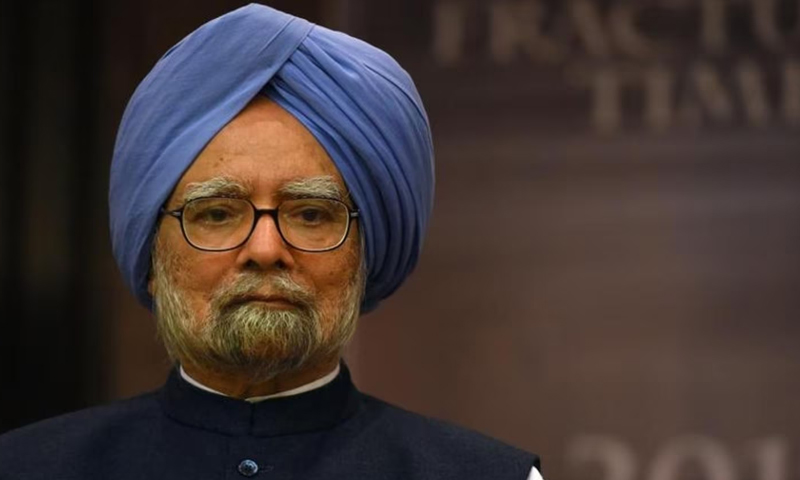
Manmohan Singh, the former Prime Minister of India who served two terms and was instrumental in liberalising the country’s economy, passed away on December 26, 2024, at the age of 92. Singh, a renowned economist and politician, had been receiving treatment for age-related medical conditions at the All India Institute of Medical Sciences (AIIMS) in New Delhi before his sudden death.
A Legacy of Economic Reform and Political Leadership
Dr. Manmohan Singh’s legacy as one of India’s most influential political and economic figures is firmly established in history. Born into a modest family in what is now Pakistan, Singh overcame numerous challenges, including studying by candlelight, to become one of the world’s foremost economists. He earned degrees from Cambridge University and Oxford University, where he completed a doctorate in economics, with a focus on the role of exports and free trade in India’s development.
His political career began unexpectedly when he was appointed India’s Finance Minister in 1991 during a severe balance of payments crisis. Singh played a pivotal role in rescuing India from economic ruin by championing bold reforms, including the liberalisation of the economy, deregulation, and efforts to open the country’s markets to the global economy. His budget speech in 1991 famously quoted Victor Hugo: “No power on earth can stop an idea whose time has come,” referring to India’s emergence as a major economic power.
From Finance Minister to Prime Minister
Singh’s transition from economist to politician was marked by his unexpected rise to the role of Prime Minister in 2004. His ascension was the result of a surprise victory by the Congress Party, led by Sonia Gandhi. Although Singh was a distinguished economist, it was believed that Gandhi, an Italian-born political leader, would face resistance due to her ancestry. Singh, a respected figure, was chosen to lead the government instead.
As Prime Minister, Singh oversaw a period of unprecedented economic growth. His government’s welfare schemes, such as a jobs programme for rural areas, helped alleviate poverty and expanded access to economic opportunities. Under his leadership, India also made significant strides in international diplomacy, including a landmark nuclear deal with the United States in 2008 that helped strengthen ties between New Delhi and Washington.
Challenges and Controversies
Despite his achievements, Singh’s time in office was not without challenges. His efforts to further liberalise India’s economy were frequently stymied by political infighting and demands from coalition partners. While Singh was widely respected by foreign leaders, he faced domestic criticism, especially during his second term. His government was beset by multiple corruption scandals, leading to widespread protests and eroding his popularity at home.
Singh’s second term also witnessed a slowdown in India’s economic growth, compounded by global economic turbulence and slow decision-making within the government. In 2012, the Congress Party lost its majority in Parliament after a key ally left the coalition in protest against economic reforms, including the entry of foreign supermarkets into India.
Despite these setbacks, Singh remained steadfast in his belief that his government had done its best. In a press conference just before leaving office, he said, “I honestly believe that history will be kinder to me than the contemporary media or, for that matter, the opposition parties in parliament.”
A Simple Life, A Lasting Impact
Singh was known for his simple lifestyle and for being a man of integrity, widely respected for his honesty and dedication to public service. While he was never seen as corrupt, he faced increasing criticism in the latter years of his premiership for failing to take decisive action against members of his government involved in scandals.
Singh’s tenure ended in 2014, when his party, the Congress Party, was decisively defeated by Narendra Modi’s Bharatiya Janata Party (BJP) in the general elections. Modi, with his promise of economic reforms and a more decisive government, ushered in a new era of Indian politics, but Singh’s contribution to India’s economic liberalisation and growth cannot be understated.
The Final Chapter
Dr. Manmohan Singh passed away peacefully on December 26, 2024, at the All India Institute of Medical Sciences, after being admitted for age-related health issues. The hospital confirmed that despite efforts to revive him, Singh was declared dead at 9:51 PM local time.
In a statement following his passing, Prime Minister Narendra Modi expressed the nation’s sorrow, saying, “India mourns the loss of one of its most distinguished leaders, Dr. Manmohan Singh Ji.” Modi praised Singh’s immense contributions to India’s economic transformation and political landscape.
Singh is survived by his wife, Gursharan Kaur, and their three daughters. His death marks the end of an era for Indian politics, with the country losing one of its most revered and respected leaders. As India reflects on his legacy, Singh’s role in shaping the modern Indian economy will remain a lasting part of the nation’s history.
