
Table of Contents
Severe weather hit Texas and Louisiana on Thursday night, bringing a series of powerful thunderstorms, including large hail, strong winds, and heavy rainfall. The storms led to widespread flight disruptions and prompted officials to issue a tornado watch across parts of the South-Central U.S.
Tornado Watch and Severe Weather Across Texas
Texas Governor Greg Abbott activated state emergency-response resources as the storm system approached, especially in the eastern half of the state. The National Weather Service (NWS) issued multiple warnings for thunderstorms, alongside flash flood advisories due to the heavy rainfall. The line of storms moved northeast at speeds of about 40 mph, intensifying throughout the evening, with hail and localized flooding being the primary threats. The risk of isolated tornadoes also remained.
In Texas, temperatures were expected to reach near 60°F by late afternoon, with conditions improving later in the day. However, by the evening, the severe weather continued to cause significant disruption, particularly at major airports.
Tornado Reported Near El Campo, Texas
In addition to hail and flooding, a possible tornado was reported near El Campo, a town located approximately 70 miles southwest of Houston. The tornado, which caused damage to some barns, was moving northeast toward Pierce, Texas. Local authorities did not report any injuries, but residents were urged to remain weather-aware as the storm continued to track eastward.
Travel Disruptions: Ground Stops and Flight Cancellations
Flight disruptions were widespread across Texas due to the severe weather. Dallas-Fort Worth International Airport (DFW) implemented a ground stop, leading to significant delays. By Thursday evening, more than 500 flights had been canceled, and over 200 others delayed. George Bush Intercontinental Airport in Houston and Dallas Love Field also experienced delays. Travelers were advised to check for updates as ongoing storms impacted holiday travel.
West Coast Weather: Atmospheric River and Blizzard Warnings
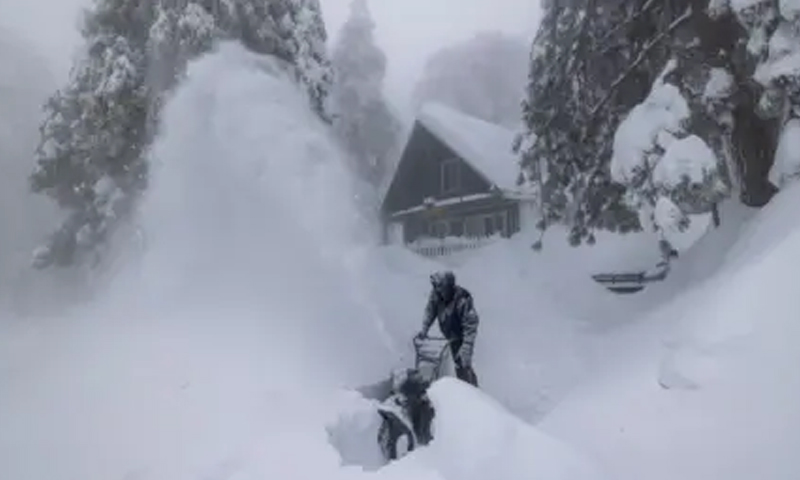
Meanwhile, the Pacific Northwest was also grappling with severe weather, with an atmospheric river bringing heavy rain, snow, and strong winds to parts of California, Oregon, and Washington. Flooding and mudslides were concerns, particularly in areas affected by recent wildfires. The NWS issued blizzard warnings for the Cascades and Olympic Mountains, where up to two feet of snow were expected, and the risk of avalanches was high. Travel was discouraged in affected areas due to hazardous conditions.
Ongoing Storm Threat
The severe weather was expected to continue moving eastward into parts of Arkansas, Louisiana, and Oklahoma, with the tornado risk extending through Friday. Residents and travelers in these areas are advised to stay informed of weather updates as the storm system progresses.
