
Table of Contents
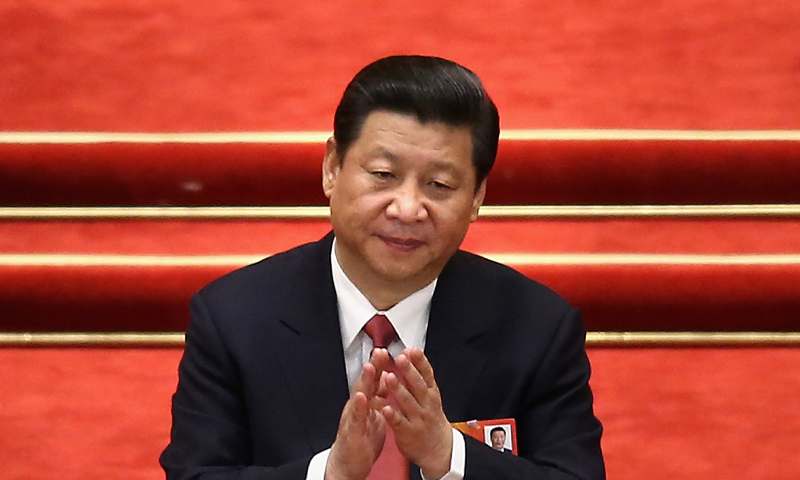
On Monday, Chinese President Xi Jinping reaffirmed his commitment to the ongoing anti-corruption campaign, calling it an “all-out battle” that is essential to the integrity of the Communist Party of China (CPC). Speaking at the annual planning session of the country’s top disciplinary agency, Xi underscored the importance of maintaining a strong, unified approach to eliminating corruption within both the government and military.
Anti-Corruption Campaign: A Decade of Sweeping Crackdowns
Xi’s remarks come as the Chinese Communist Party (CCP) continues its aggressive campaign against corruption, which he has led since taking power over a decade ago. The campaign has seen thousands of officials investigated, prosecuted, and sometimes executed for corruption-related offenses. Proponents of the initiative argue that it promotes clean governance, helping to root out corruption at all levels of government. However, critics contend that the campaign also serves as a tool for Xi to consolidate power and eliminate potential political rivals within the party.
In his speech, Xi described corruption as “the biggest threat” facing the Communist Party, emphasizing the complex and difficult nature of the fight. He called for persistence, urging officials to maintain “tenacity and perseverance” in the battle, which he acknowledged remains “grave and complex.” Despite progress, he acknowledged that instances of corruption continue to surface, signaling that much work remains to be done in eradicating the systemic issues that fuel graft.
High-Profile Corruption Cases
Over the past year, the anti-corruption campaign has led to several high-profile investigations. In November, a top Chinese military official, Admiral Miao Hua, was suspended and placed under investigation for “serious violations of discipline”—a common euphemism for corruption charges. Miao, who had served on the powerful Central Military Commission alongside Xi and other top officials, became one of several high-ranking military figures to fall victim to the anti-graft campaign. In just over a year, the crackdown has targeted senior members of China’s armed forces, including two former defense ministers.
Xi’s anti-corruption drive has not been limited to the military. In December, China executed a former official working in Inner Mongolia who had been convicted of bribery and misappropriation of public funds. The purge also extended to other areas of public life, with high-profile names from the finance and sports sectors being investigated. Among those caught up in the crackdown was Li Tie, the former head coach of China’s national men’s football team, who became the latest high-profile figure from the sports world to face charges of corruption.
The Political Dimension of the Anti-Corruption Campaign
While the anti-corruption campaign has been widely praised for its efforts to clean up China’s political system, there has been criticism that it is also used as a means for Xi to target political adversaries and solidify his grip on power. Many observers believe that the campaign has allowed Xi to neutralize potential rivals, as senior officials found guilty of corruption can be purged from the political scene. By casting himself as the defender of the party’s integrity, Xi strengthens his position and consolidates loyalty among those who remain in power.
Some of the most prominent figures to have fallen during Xi’s tenure include former Politburo members, senior military leaders, and provincial governors, many of whom were considered rivals to Xi’s leadership. The purges have had a profound effect on the political landscape, fostering a climate of caution and compliance among lower-ranking officials.
The Road Ahead for Xi’s Anti-Corruption Campaign
Despite significant progress in his fight against corruption, Xi’s latest comments suggest that the battle is far from over. He emphasized that eliminating the conditions that fuel corruption remains a “difficult task.” The Chinese president also warned that corruption continues to be a serious issue that undermines trust in the Communist Party, highlighting the importance of keeping up the momentum.
China’s continuing efforts to curb corruption come at a time when the country is facing broader challenges, including economic slowdown, international scrutiny, and internal dissent. Xi’s anti-corruption campaign remains one of his signature policy initiatives, positioning him as the protector of party integrity while also strengthening his power base.
