
Table of Contents
At least 25 flights across Europe faced hoax bomb threats, forcing emergency inspections, unexpected landings and fighter jet escorts as authorities investigate a growing wave of security disruptions.
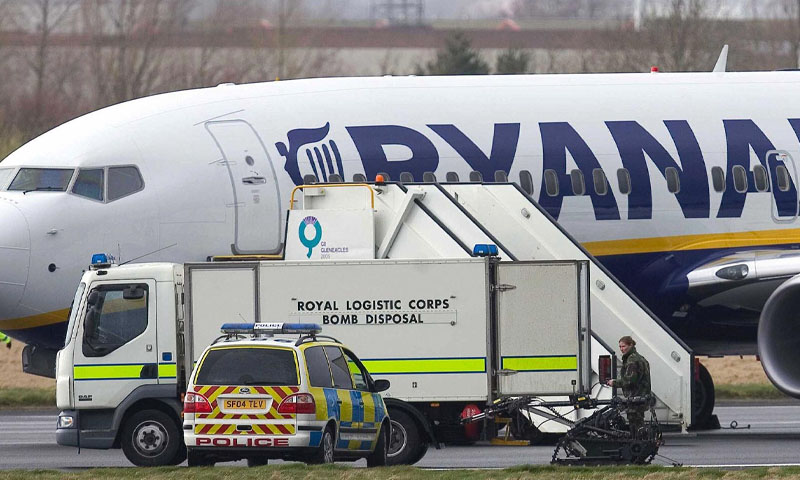
A fresh wave of suspected hoax bomb threats disrupted air travel across Europe on Thursday, affecting at least 25 flights and forcing several aircraft to make unplanned landings or undergo emergency security inspections.
Airlines and airports across Ireland, Spain, Italy, Denmark, Poland, Romania, Bulgaria and the Czech Republic reported security alerts.
In Bulgaria, fighter jets escorted three passenger aircraft to the ground. Two Ryanair flights from Copenhagen and Madrid landed in Sofia as scheduled, while a flight from London was diverted to Plovdiv.
Spanish authorities received three bomb threat emails within less than 20 minutes. The warnings targeted Air Europa flights travelling from Madrid to Paris and Iberia flights arriving from Rome and Milan.
Several aircraft were stopped, passengers were disembarked and security teams conducted inspections.
Fighter Jets Escort Passenger Aircraft
The disruptions also affected flights in several other European countries.
In the Czech Republic, two EasyJet flights from Britain, along with aircraft arriving from Ireland and Greece, landed safely in Prague. Police assessed the threats as having low credibility.
Italy deployed fighter jets to escort a Finnair aircraft travelling from Helsinki to Rome. Two other aircraft reportedly landed safely in Milan after receiving security warnings.
In Poland, a LOT flight travelling to Paris was stopped while taxiing for take-off. Passengers were transferred to another aircraft as a precaution.
Meanwhile, an Aer Lingus flight from Dublin to Rome landed safely at Evreux Airport in France. Danish police also searched two aircraft at Copenhagen Airport but found no explosive devices.
Russia Concerns Raise Fears of Hybrid Warfare
Although no government has officially blamed any country for Thursday’s threats, the incidents have intensified concerns about possible hybrid attacks against European infrastructure.
Several European governments have previously accused Russia of involvement in sabotage and cyber operations targeting critical services. Moscow has repeatedly denied such allegations.
Aviation security experts say repeated threats could be designed not only to disrupt flights but also to test how airlines, airports and security agencies respond to emergencies.
Cyberattacks Add to European Security Concerns
The latest aviation disruptions come amid reports of cyberattacks affecting supermarket refrigeration systems and French blood banks.
Experts warn that attacks targeting essential services can cause financial losses, disrupt daily life and weaken public confidence.
Earlier on Tuesday, at least seven flights and a cruise ship also received bomb threats across Europe. No explosives were discovered.
With repeated incidents affecting aviation and other critical infrastructure, European authorities face growing pressure to strengthen security and identify those responsible.
