
Table of Contents
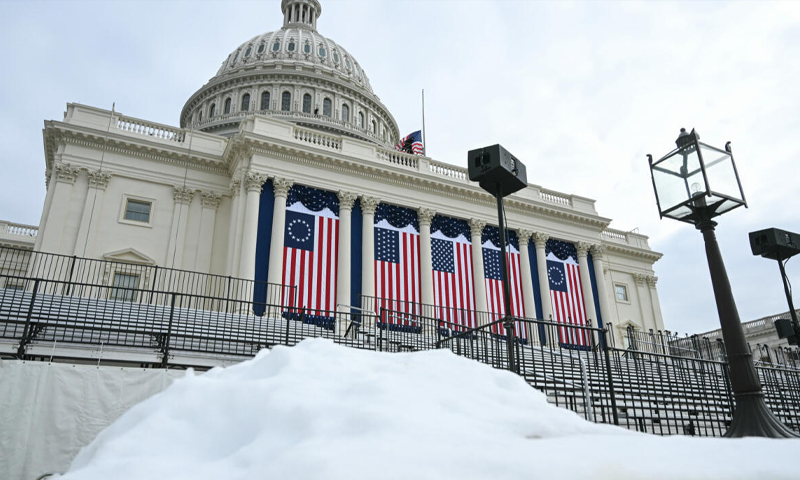
U.S. President-elect Donald Trump’s inauguration, originally planned for an outdoor ceremony, will now take place inside the U.S. Capitol due to severe cold weather. This marks the first time in four decades that a presidential inauguration will be moved indoors. Trump announced the change on his Truth Social platform, citing the “Arctic blast” sweeping the country and expressing concern for the safety of attendees. He said, “I don’t want to see people hurt or injured in any way,” prompting the decision to hold the event inside the Capitol Rotunda.
The decision to move the inauguration indoors is not unprecedented, though rare. The last time an inauguration was relocated indoors due to extreme cold was in 1985, when former President Ronald Reagan’s second swearing-in ceremony was held inside because the wind chill that day fell to between -23°C and -29°C. Monday’s forecast in Washington predicts a temperature of around -7°C at the time of Trump’s swearing-in, but it will feel significantly colder due to the wind chill.
Impact on Inaugural Celebrations and Attendees
The change in location will have a major impact on the number of people able to attend the ceremony in person. More than 220,000 ticketed guests were originally expected to be present on the U.S. Capitol grounds. However, with the ceremony now taking place inside the Capitol, only a fraction of that number will be able to witness the event firsthand. Additionally, an estimated 250,000 unticketed spectators were expected to stand on the National Mall for the outdoor ceremony. These individuals will likely not be able to attend, as the Capitol Rotunda has limited capacity.
Trump suggested that supporters still be able to view the ceremony on large screens inside the Capital One Arena, a venue that holds up to 20,000 people and is typically used for basketball and hockey games. He also announced that the inaugural parade, originally planned to march down Pennsylvania Avenue to the White House, would be held at Capital One Arena instead, though it remains unclear how a parade would be organized inside a sports venue.
In the wake of the announcement, some ticket holders, like Tammy Matte, a school secretary from Laurel, Mississippi, decided to cancel their plans to travel to Washington, D.C. for the event. Matte, who had tickets for herself, her husband, and their son, said that after learning they would not be able to see Trump in person, they decided the trip was not worth it. “We don’t feel it’s worth it not to see the ceremony in person,” Matte explained.
Crowd Size Comparisons and Media Controversy
The move to an indoor venue also means there will be no opportunity for the media to compare crowd sizes between Trump’s inauguration and those of previous presidents. Trump was famously angered by media reports following his 2017 inauguration that claimed his crowd was smaller than that of former President Barack Obama’s first inauguration in 2009. The indoor ceremony will significantly limit the number of people able to attend in person, thus avoiding direct crowd size comparisons.
While the National Park Service, which oversees the National Mall, has not clarified whether spectators will be allowed to gather on the Mall to watch the ceremony on video screens, the decision to hold the event inside will likely reduce public access to the inauguration.
Inauguration Security Adjustments
With the anticipated inclement weather, security measures for the inauguration will be adapted. Alexi Worley, a spokesperson for law enforcement agencies tasked with the inauguration’s security, noted that the U.S. Secret Service has been working closely with Trump’s inauguration and congressional committees to adjust security protocols in response to the changing venue and weather conditions. Trump is scheduled to hold a rally for his supporters inside the Capital One Arena on the eve of his inauguration, further underscoring the shift in plans.
Winter Weather at Past Inaugurations
Although this year’s inauguration marks the first time in 40 years that the ceremony will be held indoors due to cold weather, frigid conditions have been a feature of many past inaugurations. For example, President Barack Obama’s first inauguration in 2009 occurred in cold weather, with temperatures reaching around 1.5°C. In 1841, President William Henry Harrison delivered the longest inaugural address in history during wet and cold conditions, without a hat or overcoat. The extreme exposure contributed to his contracting pneumonia, and he passed away a month later, making his presidency the shortest in U.S. history.
Similarly, during President Ulysses S. Grant’s second inauguration in 1873, extremely cold temperatures and strong winds caused several cadets to collapse, and gusts made the president’s speech inaudible to people standing close by. That day’s morning temperature of 15°C remains Washington’s coldest March day on record.
Looking Ahead
Despite the colder-than-usual conditions, the inauguration will proceed with its traditional ceremonies, albeit with significant adjustments due to the weather. Trump’s decision to move the event indoors reflects both his concern for the safety of attendees and the unpredictable nature of Washington, D.C.’s winter weather. It remains to be seen whether spectators on the National Mall will still be able to witness the event from afar, but plans for the Capital One Arena suggest that there will still be a chance for many of Trump’s supporters to participate in the celebrations, albeit in a different form than originally expected.
