
Table of Contents
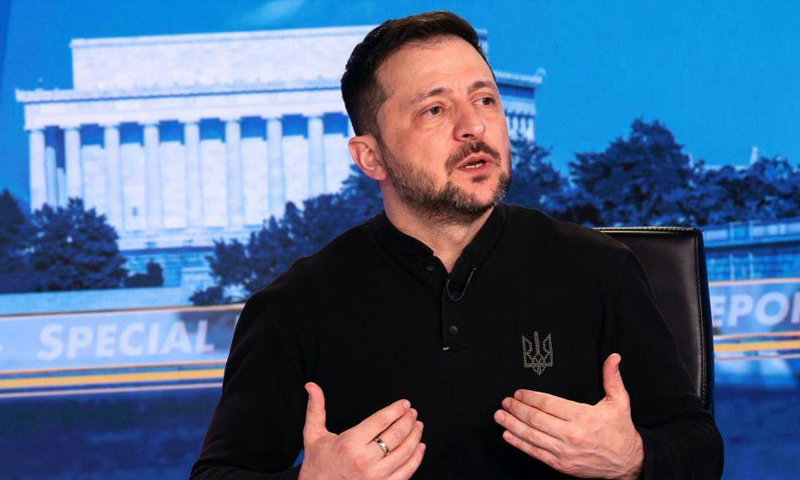
Ukrainian President Volodymyr Zelensky expressed his appreciation to European Union leaders on Thursday, acknowledging their unwavering support for Ukraine as the bloc kicked off high-stakes crisis talks. The discussions come at a crucial moment, as the US appears to be reconsidering its commitment to Kyiv’s defense, a pivot made clear after the recent meeting between President Donald Trump and Zelensky. Following this meeting, Washington announced the suspension of crucial military aid and intelligence sharing with Ukraine, heightening concerns within Europe about its own security future.
During his visit to Brussels, Zelensky addressed the EU leaders, stating, “We are very thankful that we are not alone. And these are not just words,” standing alongside European Commission President Ursula von der Leyen and Portuguese Prime Minister Antonio Costa. With the US’s long-term commitment to European and Ukrainian security now uncertain, the EU faces increasing pressure to strengthen its defense capabilities and take a more proactive role in global security.
EU Leaders Respond to Security Challenges
The summit in Brussels brought together all 27 EU leaders for the first time since the tense Trump-Zelensky meeting. With the US halting aid to Ukraine, Europe is now confronted with the reality that it may need to take on a more significant role in addressing the Russian threat. Ursula von der Leyen, the European Commission President, framed this as a “watershed moment” for Europe. She emphasized that Europe must not only protect itself but also bolster Ukraine’s ability to defend its sovereignty and work towards lasting peace.
Von der Leyen unveiled a strategic plan to mobilize 800 billion euros to “re-arm Europe,” ensuring that the EU is prepared for the growing security threats from Russia. This initiative is designed to provide member states with more flexibility to increase defense spending, something that Germany and France, two of the EU’s largest economies, are likely to embrace.
In a solemn address prior to the summit, French President Emmanuel Macron called for a significant surge in defense spending to confront what he called a “new era” of security threats. Macron raised concerns about Russia’s intentions, stating, “Who can believe that this Russia of today will stop at Ukraine?” He also suggested that, while he hoped for continued US support, Europe must be prepared for the possibility that America may not remain committed to Ukraine’s defense.
Germany’s New Defense Stance
Germany, under the leadership of Chancellor-in-waiting Friedrich Merz, is also preparing for the worst-case scenario. Merz has signaled a readiness to embrace significant defense reforms, including a sharp increase in defense spending. Germany’s pivot towards a more robust defense policy marks a significant shift from its previous post-World War II stance of pacifism and non-intervention.
As the US pauses its military assistance to Ukraine, Germany’s commitment to boosting its defense capabilities signals Europe’s growing recognition of the need to rely more on its own resources and capabilities in ensuring regional stability.
The US Role and Zelensky’s Outreach
In response to the US policy shift, Zelensky is working hard to reengage Washington and reinforce Ukraine’s relationships with European partners. After the US announced its freeze on aid, the Ukrainian president expressed a willingness to work with Trump’s leadership towards a peace deal. He also indicated openness to finalizing agreements regarding US access to Ukrainian mineral resources.
Supreme Court Rejects Trump’s Bid to Freeze Foreign Aid Payments
However, Zelensky’s position is complicated by ongoing European concerns about any potential “dictated peace” in Ukraine. German Chancellor Olaf Scholz has reaffirmed Europe’s commitment to Ukraine’s sovereignty, cautioning that any peace settlement must guarantee Kyiv’s independence. The possibility of peace talks without Ukraine’s involvement, particularly under US proposals, has created significant tensions within Europe, as it could undermine the stability of the region and the EU’s security architecture.
Growing European Collaboration
The uncertainty surrounding US support has prompted European nations, particularly France and the UK, to bolster their collaborative efforts. French President Macron and UK Prime Minister Keir Starmer are working closely to repair relations between Trump and Zelensky and rebuild the transatlantic bond. Recently, Starmer hosted a meeting in London with EU leaders, NATO Secretary General Jens Stoltenberg, and non-EU partners, including Turkey, to strengthen diplomatic and military ties.
Macron and Starmer have also proposed a one-month ceasefire in the air, at sea, and on energy infrastructure. The leaders called for a “coalition of the willing” to help ensure a future ceasefire, with Turkey signaling its willingness to participate in peacekeeping efforts, further highlighting the EU’s role in securing peace in the region.
Potential for European Security Guarantees
As the EU leaders begin to discuss what “security guarantees” they can provide to Ukraine, the possibility of deploying European troops for peacekeeping is on the table. Some EU states support this idea, while others, including Russia, have expressed firm opposition, with Moscow reiterating its stance that European military involvement would not be accepted.
While the summit in Brussels is unlikely to result in major new announcements of aid for Ukraine, the EU is expected to continue its financial support, including the 30 billion euros ($32 billion) already committed for this year. With the US reducing its level of support, the EU’s role as a key supporter of Ukraine’s defense is becoming even more critical.
