
Table of Contents
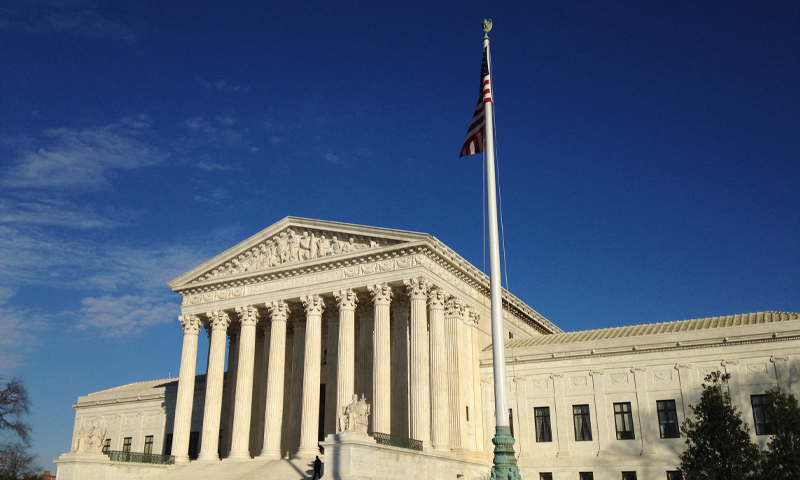
In a significant legal setback for President Donald Trump, the U.S. Supreme Court ruled on Wednesday to uphold a lower court order requiring the continuation of approximately $2 billion in foreign aid payments. The decision marks the Court’s first major ruling on a challenge to the Trump administration’s actions, reinforcing the judiciary’s role in checking executive power. The justices voted 5-4 to reject Trump’s request to freeze foreign aid payments already contracted by the U.S. Agency for International Development (USAID) and the State Department.
Legal Battle Over Foreign Aid Payments
The case stems from an attempt by the Trump administration to suspend or halt foreign aid funds allocated through contracts that were already in progress. At the heart of the dispute was the administration’s desire to freeze these payments, claiming that they could be redirected elsewhere, in line with its broader strategy of downsizing government functions, including humanitarian efforts.
The U.S. Supreme Court’s majority opinion stated that the lower court’s order, which mandated the resumption of aid payments, should stand. The justices emphasized that the federal judge overseeing the case should provide clarification regarding the specific obligations the government is required to fulfill concerning these funds.
USAID Official Warns of “Unnecessary Deaths” Amid Trump Administration’s Cuts, Then Placed on Leave
The decision is noteworthy not only because of its impact on the $2 billion in foreign aid but also because it underscores the Court’s role in upholding lower court rulings and judicial oversight of the executive branch.
A Divided Court
In this legal battle, the Court’s decision was split along ideological lines, with conservative Chief Justice John Roberts and Trump appointee Amy Coney Barrett voting alongside three liberal justices. Together, they formed the majority that upheld the lower court’s order.
The dissent, written by conservative Justice Samuel Alito, was sharp. Alito voiced strong objections, arguing that a single district court judge—who he believed might not have jurisdiction—should not have the power to compel the government to make payments, potentially leading to a permanent loss of taxpayer dollars. Alito’s dissent was joined by the other three conservative justices, reflecting a deep divide on the Court regarding executive authority and the checks on that power.
Alito expressed his disbelief at the Court’s decision, calling it “stunning” and questioning the majority’s reasoning. “Does a single district-court judge who likely lacks jurisdiction have the unchecked power to compel the Government of the United States to pay out (and probably lose forever) 2 billion taxpayer dollars?” Alito wrote in his dissent.
The Role of USAID in U.S. Foreign Policy
The ruling centers on USAID, the U.S. government’s main agency responsible for distributing foreign humanitarian aid, which operates health, education, and emergency programs in around 120 countries. During his presidency, Donald Trump had frequently criticized USAID, calling it an ineffective and overly bureaucratic organization. He even referred to it as being “run by radical lunatics.”
In parallel, Elon Musk, one of Trump’s prominent supporters and top donors, spearheaded efforts to downsize and potentially dismantle various elements of the U.S. government. Musk had described USAID as a “criminal organization” in need of serious reform. Trump’s administration had voiced plans to curb USAID’s operations, framing the agency’s work as unnecessarily expensive and ideologically driven, which likely fueled the legal conflict over aid payments.
The criticisms of USAID and other foreign aid programs have been central to the Trump administration’s broader agenda of reducing U.S. government spending and promoting a more isolationist foreign policy stance. Trump’s focus on cutting international assistance has resonated with his base, which has supported his efforts to reduce what they view as wasteful spending abroad.
A Legal Setback for the Trump Administration
While the Supreme Court ruling itself does not directly address the broader question of foreign aid policy, it represents a key moment in the ongoing legal and political battle between the Trump administration and the courts. The decision underscores the role of the judiciary in overseeing executive actions and ensuring that legally binding agreements, such as contracts for foreign aid, are respected.
The ruling also highlights the tension between the Trump administration’s stance on shrinking government programs and the judicial system’s enforcement of policies that have already been legislated or contracted. With this defeat, Trump’s efforts to redirect these funds have been temporarily halted, at least until further clarification is provided by the courts.
