
Table of Contents
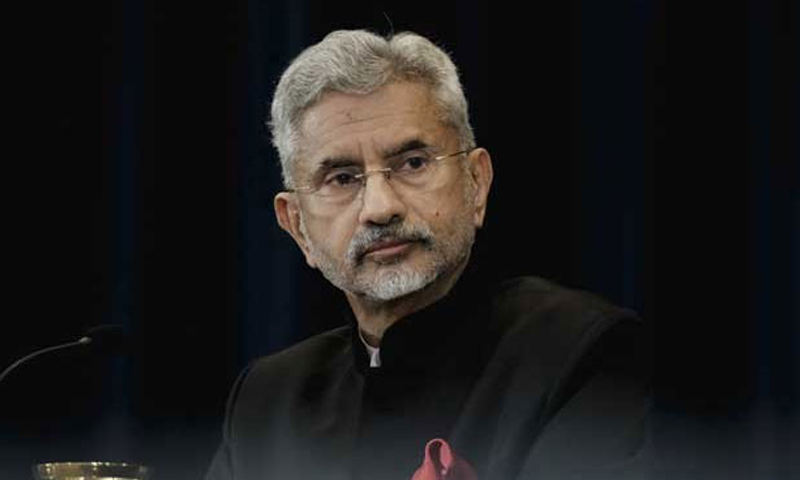
Indian External Affairs Minister S. Jaishankar has come under intense political and public scrutiny after a heated interview with a foreign journalist, in which he was questioned about the role of the United States and former President Donald Trump in defusing recent hostilities between India and Pakistan. The episode, reported by The News and now viral on social media, has become a flashpoint in an escalating political debate.
During the interview, the journalist pressed Jaishankar repeatedly to confirm or deny whether the Trump administration played a significant role in helping secure a ceasefire between the two nuclear-armed neighbours. The reporter’s inquiries grew sharper, asking, “Have you arrested the killers of the 26 people in Pahalgam? Is an operation underway to apprehend them? What role did the US play in this entire process?”
Jaishankar’s responses, while diplomatically cautious, were widely perceived as evasive. His comment that the United States “was in the United States during the process” drew sharp criticism, with many interpreting it as a deflection rather than a direct answer.
US Mediation: Confusion and Contradiction
The controversy centers around a May 10 post on former US President Donald Trump’s social media platform, Truth Social, in which he claimed credit for brokering a ceasefire between India and Pakistan. Pakistan appeared to corroborate the ceasefire, while India’s stance has remained ambiguous—alternating between acknowledgement and denial of US involvement.
Bangladesh govt calls for unity to stop ‘return of authoritarianism’
This perceived lack of clarity has drawn fire from opposition parties, particularly the Indian National Congress, which accuses the BJP-led government of lacking transparency and mishandling foreign policy. Congress leader Rahul Gandhi has used the moment to question Prime Minister Narendra Modi’s silence, writing on X (formerly Twitter):
“Who invited the US president to mediate? Why has not a single major country voiced support for us? Why is the Modi government still silent on these issues?”
Congress Highlights “Two Leaders, Two Approaches”
In a bid to contrast leadership styles, the Congress party has launched a targeted campaign highlighting the divergent responses of Rahul Gandhi and PM Modi to the Pahalgam terror attack and the subsequent Operation Sindoor. In a widely shared social media post titled “One Nation, Two Leaders,” the party noted:
“After the Pahalgam Attack: LoP Rahul Gandhi ji rushed to Kashmir, standing shoulder-to-shoulder with the grieving families of victims… PM Modi, on the other hand, was clearly absent. He skipped an all-party meeting… and was seen mingling with Bollywood stars.”
Further criticizing Modi’s response, Congress accused the prime minister of turning a national crisis into a public relations opportunity. “While Gandhi called for a special parliamentary session and questioned the ceasefire and the government’s faith in Pakistan, the party alleged that Modi remained silent on Trump’s role and instead delivered scripted Bollywood-style dialogues like ‘Garam Sindoor’,” said the post.
BJP Supporters Rally Behind Jaishankar
Despite the controversy, Jaishankar has found strong support among BJP loyalists and right-wing commentators, who have praised him for maintaining composure and not conceding ground during the interview. Social media platforms, particularly X and Instagram, have seen a wave of pro-BJP users defending Jaishankar’s handling of the situation, often referring to critics as “bhakt trolls” or accusing the media of biased questioning.
Party insiders argue that Jaishankar was simply upholding India’s longstanding position that all issues with Pakistan must be resolved bilaterally, as outlined in the Simla Agreement and Lahore Declaration. According to them, any external involvement—including from the US—is unofficial and irrelevant unless it aligns with this bilateral framework.
Broader Implications for Indian Foreign Policy
The broader implications of this incident touch upon the credibility and coherence of India’s foreign policy. The mixed messaging from New Delhi on US involvement raises concerns about internal coordination and external communication. Critics argue that ambiguity on such sensitive matters undermines India’s diplomatic standing and opens the door for foreign powers to exploit divisions.
Moreover, the political fallout underscores how foreign policy issues are becoming increasingly central to domestic politics. The Congress party’s aggressive stance shows a strategic pivot to question the government’s handling of international affairs—an area once considered a strength of the Modi administration.
