
Table of Contents
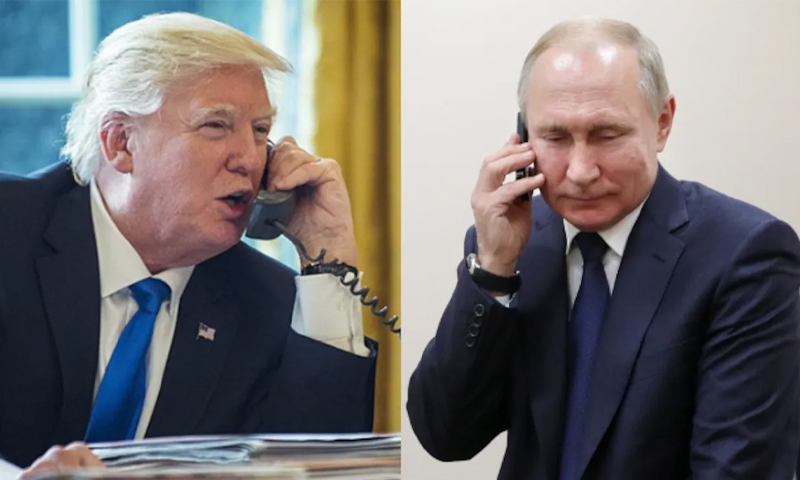
In a revealing and high-stakes phone call on Wednesday, Russian President Vladimir Putin told former U.S. President Donald Trump that Moscow would be compelled to respond to a series of recent drone strikes carried out by Ukraine on Russian military targets. According to Trump, who posted details of the conversation on social media, the Russian leader emphasized that these attacks—particularly on airfields housing strategic bombers—demanded a firm response from the Kremlin.
The call comes at a time when the war between Russia and Ukraine, now in its third year, continues to escalate, with both sides increasing cross-border strikes and the West facing growing pressure over its role in the conflict.
Putin Reaffirms Russia’s Right to Respond Militarily
In the conversation, Putin reportedly made clear to Trump that Ukraine’s recent drone attacks on Russian military airbases, especially those with nuclear-capable bombers, would not go unanswered. “He said very strongly that he will have to respond to the recent attack on the airfields,” Trump noted in his social media statement.
The Russian government also confirmed the sentiment earlier Wednesday, stating that all options, including military retaliation, were “on the table.” This warning follows what Moscow describes as increasing Western involvement in Ukrainian military strategy, including strikes deep into Russian territory.
Russian officials are now urging the U.S. and the UK to intervene diplomatically and restrain Kyiv, while Ukrainian leaders have praised the attacks as proof that they still have the capacity to fight back.
Trump Acknowledges Limits of Peace Hopes
Despite what Trump described as a “good conversation,” he was quick to clarify that it was “not a conversation that will lead to immediate peace.” The former president, who has repeatedly claimed he could end the war within 24 hours if reelected, did not outline how he would achieve that goal and admitted that the situation on the ground remains deeply complicated.
Trump’s remarks suggest a growing sense of frustration with Putin as well, particularly as Russia’s continued aggression undermines his campaign pledge to end the conflict quickly.
U.S. and UK Deny Involvement in Ukrainian Drone Operations
In response to Moscow’s accusations, both U.S. and British officials have denied any prior knowledge of Ukraine’s drone attacks over the weekend. The strikes, which reportedly hit airbases housing Russia’s long-range nuclear bombers, were hailed by Ukrainian military sources as a significant blow to Moscow’s aerial advantage.
Western leaders, while continuing to support Ukraine’s defense, are walking a diplomatic tightrope—seeking to weaken Russia’s military position without provoking direct escalation.
Nuclear Diplomacy: Trump and Putin Discuss Iran Deal
A significant and potentially less confrontational part of the Trump-Putin call centered on Iran’s nuclear program. According to Trump, Putin indicated a willingness to participate in talks aimed at reviving a nuclear deal with Tehran. Trump stated, “I told President Putin that Iran cannot have a nuclear weapon, and on this, I believe we were in agreement.”
UN Elects 5 New Members to Security Council for 2026–2027 Term
Trump accused Iran of “slow walking” its response to proposals and warned that time was running out for Tehran to accept terms that would prevent it from enriching uranium to weapons-grade levels. “We will need a definitive answer in a very short period of time,” he said.
This development coincides with a Kremlin statement that Putin had offered support to Iran’s newly elected President Masoud Pezeshkian, expressing Russia’s readiness to assist in advancing nuclear negotiations.
Khamenei Rejects U.S. Proposal on Uranium Enrichment
Despite diplomatic overtures from both the U.S. and Russia, Iran’s Supreme Leader Ayatollah Ali Khamenei strongly rejected Washington’s current proposal on Wednesday, stating it contradicts Tehran’s national interests. The core of the dispute remains Iran’s insistence on its right to continue uranium enrichment, which Western powers see as a red line.
Iran’s reluctance to compromise raises fresh concerns about regional stability, especially as tensions grow not only in Ukraine but across the Middle East.
Geopolitical Outlook: Signs of Tension, and Slight Cooperation
Though the Trump-Putin conversation did not produce immediate breakthroughs, it revealed the contours of a shifting global chessboard. On one hand, tensions are flaring in Eastern Europe, with Russia hinting at escalated military retaliation. On the other hand, a rare point of convergence may be forming over the need to contain Iran’s nuclear ambitions.
The mix of conflict and cautious cooperation underscores the volatility of current global politics and the unpredictable role that unofficial diplomacy—particularly involving figures like Trump—can play.
