
Table of Contents
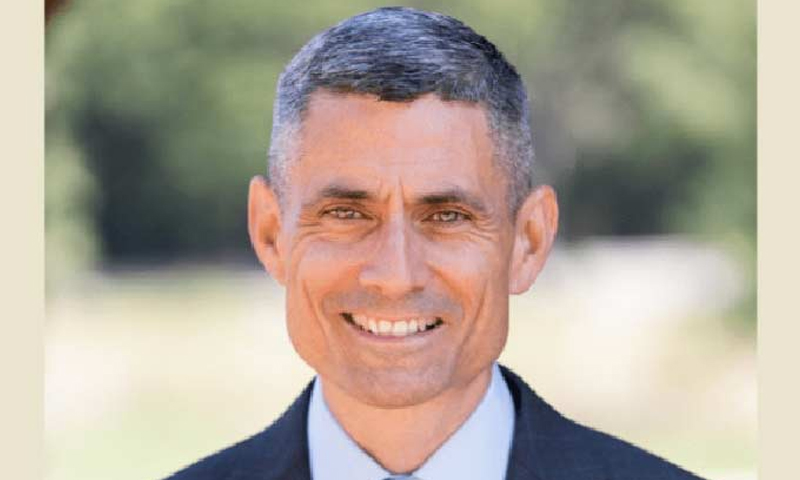
In a major development for regional diplomacy, President Donald Trump’s nominee for Assistant Secretary of State for South and Central Asia, Paul Kapur, has promised stronger engagement with Pakistan on a range of fronts, including security cooperation, trade, and counterterrorism.
Kapur, a respected US scholar of Indian origin, made these remarks during his Senate confirmation hearing, where he outlined a nuanced approach to South Asia that balances US strategic interests with Pakistan and India.
US Commitment to Regional Stability and Counterterrorism
“If confirmed, I will continue to promote longstanding US security interests with Pakistan and India through the pursuit of peace and stability, and the fight against terrorism,” Kapur stated, signaling a continuity of US engagement in one of the world’s most volatile regions.
He also stressed the importance of ensuring that Afghanistan does not once again become a launchpad for terrorism, adding that he would support efforts to repatriate detained Americans and prevent the rise of extremist sanctuaries in the region.
Context: Rising Tensions Following Pahalgam Incident
Kapur’s statements come amid renewed tensions between India and Pakistan, following the Pahalgam incident in Indian Illegally Occupied Jammu and Kashmir (IIOJK), where 26 tourists were killed. India immediately blamed Pakistan for the attack without evidence, triggering cross-border military exchanges.
India responded with unprovoked strikes across the Line of Control (LoC), leading to civilian casualties in Pakistan. The Pakistan Armed Forces launched a retaliatory operation — Operation Bunyan-um-Marsoos — downing dozens of drones and six Indian fighter jets, including three Rafales.
The intense exchange lasted 87 hours and was eventually halted through a ceasefire brokered by the United States, with direct intervention by President Trump, Vice President JD Vance, and Secretary of State Marco Rubio.
Diplomatic Outreach Led by Bilawal Bhutto
In the aftermath of the conflict, Pakistan embarked on an extensive global diplomatic campaign to counter India’s narrative and advocate for de-escalation and dialogue. A nine-member parliamentary delegation, led by PPP Chairman Bilawal Bhutto Zardari, traveled to the United States, the United Kingdom, and Europe.
The delegation, which included prominent political figures such as Hina Rabbani Khar, Sherry Rehman, Khurram Dastgir Khan, Musadik Malik, and former diplomats Jalil Abbas Jilani and Tehmina Janjua, met with UN officials, US lawmakers, and State Department representatives to raise awareness about Indian aggression and the need for renewed engagement on Kashmir.
US Department of State Hints at Trump’s Mediation Role
Amid this diplomatic push, State Department spokesperson Tammy Bruce acknowledged that President Trump has shown willingness to mediate between Pakistan and India. Responding to questions regarding the meeting between Under Secretary Allison Hooker and the Pakistani delegation, Bruce said the US remained committed to supporting peace and the existing ceasefire.
Posting on Truth Social, President Trump remarked:
“I will work with you, both to see if, after a ‘thousand years,’ a solution can be arrived at concerning Kashmir.”
Pakistan has welcomed Trump’s remarks as a potential turning point, while India has dismissed the offer, maintaining its long-standing policy that Kashmir is a bilateral issue not open to international mediation.
Donald Lu’s Exit and the Shadow of Controversy
If confirmed, Paul Kapur will replace Donald Lu, the outgoing Assistant Secretary of State for South and Central Asian Affairs, whose tenure became controversial due to allegations leveled by former Prime Minister Imran Khan.
Khan accused Lu of being part of a “foreign conspiracy” to remove him from office — a claim that sparked widespread political unrest in Pakistan and added strain to US-Pakistan relations. Lu’s name has since become emblematic of alleged US interference, particularly among supporters of the Pakistan Tehreek-e-Insaf (PTI).
US Hints at Trump’s Role in Kashmir Mediation Amid Renewed Diplomatic Push
Kapur’s nomination is seen as an opportunity to reset relations and build trust with Islamabad while also reaffirming strong US-India ties.
A Strategic Balancing Act
Kapur acknowledged the difficulty of maintaining balanced ties with both Pakistan and India, especially given the escalating tensions over Kashmir and broader regional competition. Nonetheless, he committed to pursuing constructive dialogue, strengthening bilateral trade, and promoting regional peace.
Observers see his remarks as part of a broader shift under Trump’s foreign policy doctrine — one that embraces high-stakes diplomacy and personal leadership, often bypassing traditional diplomatic norms to achieve breakthroughs.
Looking Ahead: UNGA as a Diplomatic Opportunity
As speculation grows about a possible trilateral meeting during the upcoming UN General Assembly session in New York this September, attention now turns to whether President Trump can convert his offer into tangible diplomatic engagement between India and Pakistan.
While challenges remain — particularly India’s resistance to third-party involvement — the US-brokered ceasefire, Trump’s public mediation offer, and Kapur’s diplomatic posture have reignited global interest in resolving the Kashmir dispute through peaceful means.
