
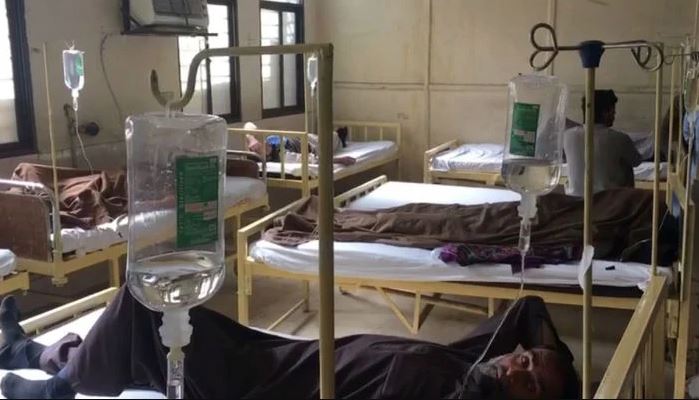
The people of Kharan district, a divisional headquarters of the new Rakhshan Division in Balochistan, are grappling with a severe lack of basic health services and facilities. The district headquarters hospital (DHQ) is failing to meet the health needs of the community, exacerbating the ongoing healthcare crisis.
According to a medical professional from the DHQ, who spoke anonymously to Local Media, the hospital is confronted with a shortage of doctors, particularly specialists. The reluctance of medical professionals to serve in remote and underdeveloped areas compounds the challenges faced by the local population.
“The first issue in rural areas like Kharan is the lack of doctors. The majority of medical officers pursue further education, post-graduation, teaching, and management roles, avoiding service in remote areas,” stated the anonymous doctor. The hospital, not upgraded for an extended period, lacks essential equipment and facilities for testing and treatment.
“In areas like Kharan, where basic facilities like electricity, roads, medicine, and quality education are unavailable, attracting and retaining professionals to their native town becomes a considerable challenge. Native doctors often complete their practice but avoid returning to their local areas, fearing the compromise of their future,” explained the doctor.
The transfer and posting of doctors and other staff in the health department are allegedly influenced by political factors. Some doctors have reportedly used their connections to cancel transfer orders to Kharan, exacerbating the scarcity of medical professionals.
The DHQ cannot conduct various routine tests, including MRI, CT scan, ultrasound, sugar HP1C, CPC, liver function, blood test, thyroid profile test, serum electrolytes, serum calcium, urine test, biopsy, typhoid test, complete blood test, among others. These tests necessitate specialist doctors, a resource not readily available in the hospital.
Contradicting these claims, another health official, also speaking anonymously, asserted that “all the baseline tests are available at DHQ and at some Basic Health Units (BHUs) and Rural Health Centers (RHCs).” However, he noted that advanced field-related tests could only be performed with the hiring of field specialists equipped with supporting staff.
The health crisis in Kharan district mirrors the broader healthcare challenges in Balochistan, where thousands lack access to basic health services, including a dedicated cancer hospital. The province records over 16,000 new cancer cases annually, forcing patients to travel to other cities for treatment.
In 2021, the Balochistan government initiated the construction of the first cancer hospital in Quetta, offering hope for improved healthcare. However, with the project still under construction, residents of Kharan and other remote areas continue to wait for enhanced medical facilities.
Despite the provincial government’s allocation of Rs65.5 billion for the health sector in its 2023-24 budget, Kharan district residents continue to grapple with a shortage of medicines and surgical instruments at the district headquarters hospital (DHQ). The budget details outlined Rs51.74 billion for non-devolvement sectors and Rs13.74 billion for the development sector in healthcare.
Former provincial finance minister Zmarak Khan Achakzai highlighted that Rs4.87 billion had been designated to ensure the availability of medicines in hospitals. However, patients in the DHQ hospital in Kharan are still deprived of this facility due to management issues.
The hospital’s medicine distribution sector, divided into the main store and the sub-store, faces challenges. While the main store contains medicines for chronic, diabetic, and hyperthyroid patients, delivery to the sub-store for distribution is delayed, preventing patients from receiving their required medicines regularly.
Additionally, the hospital lacks modern sterilization facilities for surgical instruments, posing risks of blood-borne diseases and the spread of hepatitis. The hospital also relies on trainees to manage patients during night shifts.
Kharan residents are urging the provincial government and health authorities to take notice of the situation and enhance health facilities in the district.
Patients in Kharan, a district in Balochistan, are confronting a dire lack of qualified doctors and proper medical facilities at the recently upgraded District Headquarters (DHQ) hospital, now classified as a teaching hospital. The situation has raised concerns about the quality of healthcare services provided to the local population.
According to local reports, many doctors are frequently absent from their duties, operating private clinics during hospital hours. Some doctors have been reported as rude and unprofessional in their interactions with patients.
Waheed Baloch* (name changed), a professor at Balochistan University’s sub-campus in Kharan, shared his experience, stating, “I have never found any doctors at the hospital, especially lady doctors who are consistently unavailable. A female doctor runs a clinic in town and avoids checking patients in the hospital, exhibiting inappropriate behavior towards them.”
He also highlighted the hospital’s frequent power outages, with the generator malfunctioning, adversely affecting services and available tests.
An insider, who wished to remain anonymous, confirmed reports of doctors prescribing excessive or incorrect medicines, leading to overdoses and complications. The lack of professional skills and experience is cited as a significant factor, and sometimes, patients’ relatives reportedly misbehave with the doctors.
The insider revealed that the Local Health Board (LHB) staff, not trained to handle complicated cases, care for pregnant women in the absence of gynecologists. This situation has resulted in tragic outcomes, with several pregnant women losing their lives due to inadequate care.
A health official, also requesting anonymity, pointed to the unavailability of slots and salaries as the main reasons for the shortage of specialist doctors in Kharan. The inability to draw salaries locally makes specialists reluctant to join. Although the DHQ has been declared a teaching hospital to enhance capacity, slots for specialists have not been allocated
