
Table of Contents
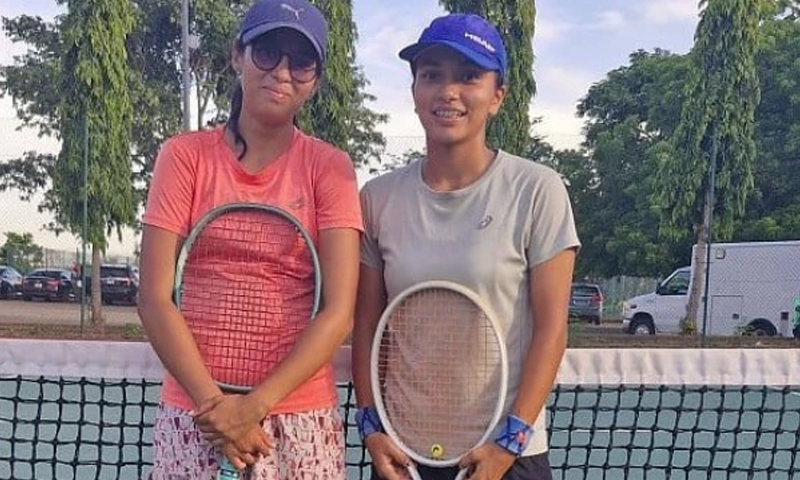
In a world often divided by borders and political animosity, sports once again proved its unifying power. At the International Tennis Federation (ITF) World Tennis Tour Juniors event in Abuja, Nigeria, two teenage girls — Soha Ali of Pakistan and Sidhak Kaur of India — teamed up for the girls’ doubles category, earning not only a semifinal finish but also global recognition for their courageous act of unity.
Their unlikely partnership, formed amid long-standing geopolitical tensions between their countries, was hailed by the ITF under the theme “Sports Unite Nations” — a timely message given the recent escalations in rhetoric between New Delhi and Islamabad.
A Symbolic Teaming Beyond Borders
India and Pakistan, neighbors with a shared but complicated history since gaining independence in 1947, have fought three wars and have no regular sporting ties, especially in cricket — the sport most impacted by the strained relationship.
In this rare instance, sport transcended politics. The young players, Soha and Sidhak, quietly partnered for the tournament, and their performance and symbolism drew media attention across Nigeria, Pakistan, and beyond. Their victory in the quarterfinals was a testament not just to their skill, but to the bridging power of sport.
They defeated Nigerian duo Fego Aiyetoma and Tolu Vyashi in straight sets, 6-3, 6-4, to storm into the semifinals. However, their run ended on Thursday night when they lost to local favorites Goodnews Aina and Success Ogunjobi with a score of 2-6, 2-6.
Despite the loss, the Indo-Pak duo left a lasting impression.
Echoes of the Indo-Pak Express
Their partnership drew inevitable comparisons to the famed Indo-Pak men’s doubles pair — Rohan Bopanna of India and Aisam-ul-Haq Qureshi of Pakistan — affectionately known as the “IndoPak Express.”
That duo reached the final of the 2010 US Open and were lauded globally for using tennis as a platform to advocate for peace between the two nations. Their campaign “Stop War, Start Tennis” was a powerful message that lives on in moments like this.
Aisam-ul-Haq Qureshi, now President of the Pakistan Tennis Federation, expressed pride in seeing the next generation follow in those footsteps.
“As a player and as President of the Pakistan Tennis Federation, I really felt great that Soha partnered with Sidhak in the ITF event,” Aisam told Telecomasia.net.
“I have always said that sports should be kept apart from political barriers. Sports unite people, and that’s the beauty of it.”
Sport as a Platform for Peace
Despite their young age, the courage shown by Soha and Sidhak should not be underestimated. In countries where cross-border collaborations are rare and often politically sensitive, such a decision can attract backlash.
Cristiano Ronaldo Rules Out Club World Cup Appearance
Both players chose not to speak to the media, reportedly due to concerns about how the partnership would be perceived back home. This silence speaks volumes about the fragility of sporting diplomacy in deeply divided regions.
Sidhak Kaur’s lineage adds a compelling layer to the story. She is said to be the grand-niece of Surinder Singh Sodhi, the Indian Olympian who played a pivotal role in India’s gold medal-winning field hockey team at the 1980 Moscow Olympics — another historic example of sporting glory tied to national pride.
How the Partnership Was Formed
According to ITF guidelines, players are allowed to choose their own doubles partners after mutual discussions. This underscores the fact that the decision was deliberate and voluntary, likely born out of mutual respect and a shared love for the sport rather than national agendas.
The pairing has been widely applauded in Nigerian, Pakistani, and neutral international media, despite limited attention from major Indian outlets. The lack of official reaction from either government is expected, but the impact on the ground — especially among young tennis enthusiasts — has been quietly profound.
A Moment of Unity in a Divided Region
While Soha and Sidhak’s journey in Abuja ended short of a title, their appearance on court together may inspire future athletes to challenge borders, biases, and barriers. In an age where diplomatic ties between India and Pakistan remain frozen, these two young women offered a rare glimpse of what unity might look like — not in political chambers, but on the tennis court.
“Our culture is the same. I truly believe sports is a platform to achieve better relations,” Aisam-ul-Haq added, echoing a sentiment shared by millions who yearn for peace through shared human experiences.
