
Table of Contents
In a rare diplomatic development, Iran and the United States held indirect talks in Oman on Saturday, aimed at addressing the mounting tension surrounding Tehran’s expanding nuclear programme. According to Iranian officials, the dialogue was held in a “productive, calm, and positive atmosphere” and will resume next week.
This marks the first engagement between Iran and the Trump administration since Donald Trump re-entered the presidency, following his initial term from 2017 to 2021.
Iran Optimistic About Launching Formal Negotiations
Iranian Foreign Minister Abbas Araqchi told state television that the two sides were “very close” to agreeing on a framework that could lead to full-fledged negotiations.
“If we can conclude this basis next week, we’ll have gone a long way and will be able to start real discussions,” Araqchi stated.
He stressed that Tehran does not seek negotiations for the sake of appearances, but desires an agreement that delivers practical results, particularly in the short term.
Oman Mediates Indirect Exchange Between Tehran and Washington
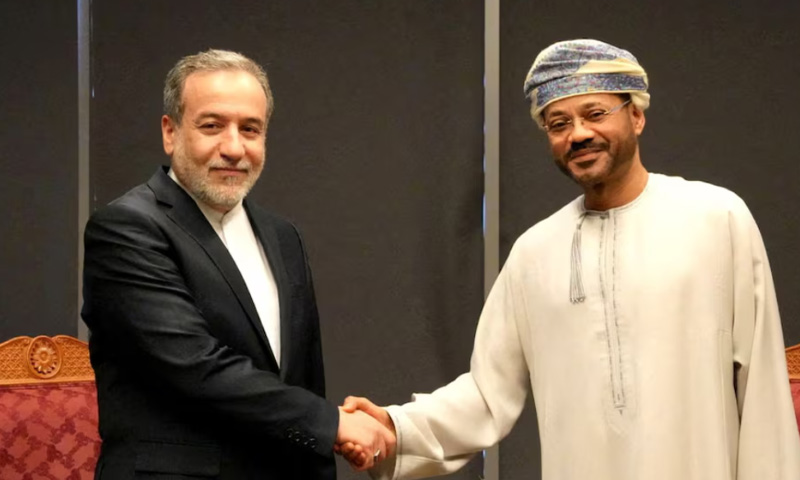
The Saturday talks were indirect, with Oman acting as a go-between — a method preferred by Iran. The delegations from each country were seated in separate rooms and exchanged messages via Omani Foreign Minister, according to Foreign Ministry spokesman Esmail Baghaei.
Following over two-and-a-half hours of indirect discussion, the heads of the Iranian and U.S. delegations — Abbas Araqchi and Trump’s Middle East envoy Steve Witkoff — shared a brief, polite encounter in the Omani minister’s presence.
Key Focus: Sanctions, Uranium Enrichment & Regional De-escalation
An Omani source told Reuters that the talks centered around:
- De-escalating regional tensions
- Prisoner exchanges
- Limited sanctions relief in return for Iran curbing its nuclear activity
However, Iran’s spokesman Baghaei denied aspects of this account, without elaborating further.
The US has not yet issued any official comment on the discussions.
Trump Threatens Military Action Amid Rising Uranium Enrichment
President Trump, who withdrew the US from the 2015 Iran nuclear deal during his previous term and reimposed harsh sanctions, has recently threatened military action if no agreement is reached to halt Iran’s accelerating uranium enrichment.
Western nations accuse Iran of moving closer to weapons-grade enrichment, with uranium purity reaching 60%, just short of the 90% required for a nuclear warhead. Tehran maintains that its programme is for peaceful energy purposes only.
Google Lays Off Hundreds in Android, Pixel, and Chrome Teams
Iran’s Supreme Leader Grants Full Authority for Talks
Iran’s Supreme Leader Ayatollah Ali Khamenei has reportedly given Araqchi full authority to negotiate with the Americans, signaling Tehran’s openness to a potential diplomatic path — though with clear red lines.
Iran has categorically ruled out negotiating its ballistic missile programme or broader defense capabilities, which Western countries consider destabilizing but Tehran views as essential for deterrence.
“There is a chance for initial understanding… if the other party enters the talks with an equal stance,” Araqchi said.
High Stakes in a Volatile Middle East
The talks come at a time of extreme volatility in the Middle East. Ongoing wars in Gaza and Lebanon, missile exchanges between Iran and Israel, and Houthi attacks in the Red Sea have raised fears of wider regional conflict.
Iran’s influence in the region has weakened significantly in recent months. Key allies in its so-called “Axis of Resistance” — including Hamas, Hezbollah, and the Assad regime in Syria — have suffered major setbacks, including the fall of Bashar al-Assad’s government in December 2024.
Failure to achieve diplomatic progress could trigger military escalation. Tehran has warned that neighboring countries hosting US military bases would face “severe consequences” if involved in a strike on Iranian soil.
A Diplomatic Opening, But Deep Divides Remain
Despite this diplomatic opening, deep mistrust remains. Trump’s administration continues to pursue a “maximum pressure” policy, reactivating sanctions and heightening rhetoric since returning to office in February.
At the same time, Iran’s nuclear programme has leapt forward since the 2018 collapse of the original JCPOA deal, fueling Western and Israeli fears of an eventual Iranian bomb.
Israel has called Iran’s nuclear ambitions an “existential threat”, and has repeatedly signaled it would resort to military options if diplomacy fails.
