
Table of Contents
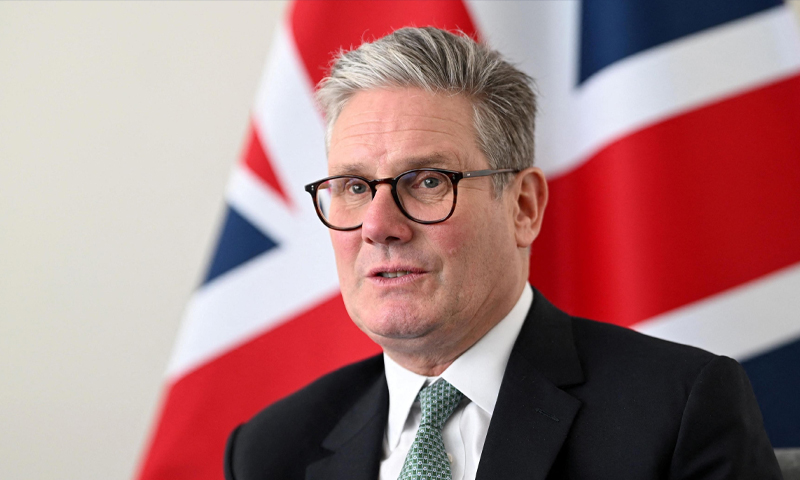
In a bold strategic pivot, Prime Minister Keir Starmer announced that the United Kingdom’s military is entering a new phase of “war-fighting readiness” as part of a long-term defence strategy designed to address escalating global threats, especially from Russia. Speaking in Glasgow, Starmer stressed the importance of bolstering the UK’s military capacity in response to a rapidly changing and increasingly unstable international environment.
The decision, which underscores the UK’s commitment to deterrence and military preparedness, is framed as a necessary step to ensure national security in the face of rising geopolitical tensions. Starmer made it clear that the UK cannot afford to ignore the aggression displayed by Russia, citing the country’s military activity as a driving force behind this new direction.
Defence Spending Boosted to 3% of GDP by 2034
At the heart of the strategy is a major pledge to increase defence spending to 3% of GDP by 2034, a goal that reflects Starmer’s commitment to a stronger, more resilient military force. However, despite the ambitious target, the Prime Minister resisted calls for an immediate increase in military funding. When asked about expediting the timetable, Starmer firmly responded, “I don’t believe in performative fantasy politics,” a thinly veiled jab at critics who have urged quicker action to meet the growing threats from Russia and global instability.
The announcement comes amid increased pressure from NATO allies and the ongoing conflict in Ukraine, with many arguing that the UK should do more to strengthen its military capabilities. Starmer’s reluctance to meet a shorter timeline suggests a more pragmatic approach, aiming to balance military needs with fiscal responsibility.
Strategic Review Focuses on Escalating Global Threats
The UK’s updated military posture follows a newly conducted strategic review, which was spearheaded by former NATO Secretary General Lord Robertson. The review highlights several key initiatives, including the development of new submarines, an expansion of munitions manufacturing, and a firm commitment to the UK’s NATO-first approach.
Lord Robertson’s review is expected to offer a comprehensive analysis of the UK’s readiness to face mounting security challenges. The full review is due to be published soon, with Defence Secretary John Healey expected to provide additional insights and specifics on the government’s defence plans in the coming weeks.
US Investigates Adani Group for Potential Sanctions Evasion with Iranian LPG
One of the main objectives of this strategic shift is to maintain the UK’s position as a leading military power in NATO, ensuring that the country remains capable of responding to the growing threats posed by Russia, as well as other global uncertainties.
Opposition Parties Challenge Starmer’s Defence Strategy
While Starmer’s strategic vision has received support from parts of his party, the move has drawn criticism from various opposition factions. Conservative leader Kemi Badenoch quickly questioned whether Starmer’s proposed budget timeline would be sufficient to meet the urgent challenges posed by a rapidly evolving global landscape. Badenoch has called for a more immediate investment in military capabilities.
The Liberal Democrats have also expressed concerns, with party representatives arguing that the UK needs to act faster and allocate more resources to defence in the short term. Party leader Ed Davey suggested that the UK must not wait until 2034 to meet current military needs, especially given the ongoing conflict in Ukraine and Russia’s aggressive posture.
Despite these challenges, Starmer remains steadfast in his approach, insisting that his timeline is grounded in stability and a careful assessment of national priorities. He has framed his defence strategy as a reflection of responsible governance, one that ensures the UK is prepared for the worst while also being mindful of long-term fiscal health.
A Pragmatic Approach to National Security
Starmer’s comments on “war-fighting readiness” and the need to “innovate and accelerate at a war-time pace” signal that the government is taking national security seriously, particularly as threats from Russia continue to shape global dynamics. His strategy aims to ensure that the UK is not only ready for current conflicts but also prepared to tackle any emerging military threats in the future.
In his speech, Starmer emphasized that deterrence remains the key objective, suggesting that by being prepared for war, the UK can avert conflicts before they escalate. His statement reflects a broader, preventive approach to global security, with an emphasis on readiness rather than intervention.
