
Table of Contents
As of May 2025, Pakistan has reported 10 confirmed cases of wild poliovirus, marking a concerning increase in the number of polio cases for the year. The new cases were confirmed by the Regional Reference Laboratory for Polio Eradication at the National Institute of Health (NIH) in Islamabad. These two new cases were detected in the districts of Lakki Marwat and Bannu, both of which are located in the southern region of Khyber Pakhtunkhwa (KP). The total number of confirmed cases in 2025 thus far includes five from Khyber Pakhtunkhwa, four from Sindh, and one from Punjab.
Polio is a highly contagious and debilitating disease that primarily affects children under the age of five, potentially leading to permanent paralysis or even death. The fact that polio cases are still being reported despite years of concerted efforts to eradicate the disease underscores the continued challenges faced by health authorities in reaching every child with the vaccine.
Operational Hurdles and Restricted Access to Vaccination Campaigns
While high-quality polio vaccination campaigns are ongoing throughout Pakistan, certain regions continue to face significant challenges. The most critical of these are operational difficulties and restricted access in high-risk areas, particularly in the southern parts of Khyber Pakhtunkhwa. These challenges are hampering the effectiveness of vaccination efforts, leaving thousands of children vulnerable to poliovirus exposure.
Health authorities point out that in some areas, such as UC Bakhmal Ahmad Zai in Lakki Marwat, children missed out on vaccination opportunities during the February and April 2025 immunization campaigns. These gaps in vaccination coverage have created immunity gaps, which leave children susceptible to the virus. In UC Saintanga, Tehsil Wazir, in Bannu, no comprehensive vaccination campaign has been carried out since October 2023, further exacerbating the situation.
Five children killed in Khuzdar bomb explosion
Moreover, there is a severe shortage of female vaccinators in some areas, which adds to the challenges. In many conservative regions, female vaccinators are crucial for gaining the trust of families and ensuring that children are vaccinated in homes. The lack of adequate female vaccinators and gaps in monitoring have contributed to the widening immunity gaps.
Pakistan Polio Eradication Programme’s Response
In response to the growing number of polio cases, the Pakistan Polio Eradication Programme (PPEP) has ramped up efforts to address both access and operational challenges. The PPEP has been actively engaging with local communities, government agencies, and international stakeholders to ensure that vaccination campaigns are more effective in high-risk areas.
To combat the increasing number of polio cases, the government has introduced an intensified vaccination schedule, targeting areas with higher transmission rates. Health authorities are focusing on reaching children in regions like southern Khyber Pakhtunkhwa, where the poliovirus continues to pose a significant threat.
The PPEP is also addressing logistical challenges, such as the shortage of female vaccinators, by recruiting more women into the vaccination workforce. These efforts are designed to enhance the outreach of immunization campaigns and ensure that every child receives the necessary polio vaccine doses.
Third Nationwide Polio Vaccination Campaign of 2025
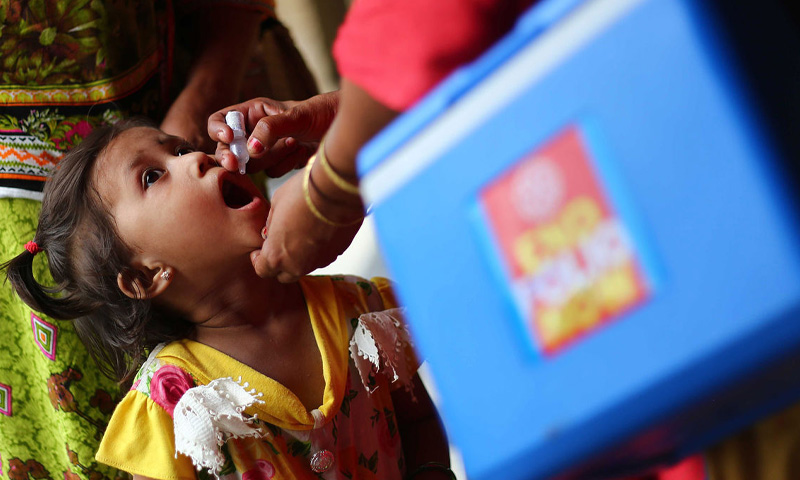
One of the key strategies to halt the transmission of polio in Pakistan is the launch of the third nationwide vaccination campaign of 2025, scheduled to begin on May 26. This campaign will target more than 45.4 million children under the age of five across 159 districts, including those in high-risk areas like southern Khyber Pakhtunkhwa. The goal is to vaccinate every child with the oral polio vaccine (OPV) to strengthen immunity and prevent further spread of the virus.
The campaign is part of Pakistan’s ongoing commitment to eliminate polio from the country, with a long-term goal of ensuring that no child suffers from polio-related paralysis in the future. This is a crucial step in protecting the younger generation and safeguarding the progress made in polio eradication efforts in the region.
The Importance of Vaccination and Community Support
Polio is a preventable disease, but it requires a consistent and comprehensive approach to vaccination. Repeated doses of the oral polio vaccine are critical to providing full protection against the virus. Every dose strengthens immunity and reduces the risk of transmission, making it essential that all children receive the full course of vaccination.
The Pakistan Polio Eradication Programme is calling on all parents to ensure their children do not miss any opportunity to receive the polio drops. Health authorities emphasize that even one missed dose can leave children vulnerable to lifelong paralysis. Therefore, it is imperative that every child, no matter their location, receives the vaccine as part of Pakistan’s essential immunization schedule.
The success of the polio eradication initiative also relies heavily on community support. Local communities, parents, and caregivers play a pivotal role in ensuring that every child is vaccinated. Cooperation and trust between health workers and communities are vital in overcoming the operational hurdles and access barriers that have historically plagued vaccination campaigns.
