
Table of Contents
Minotaur’ Explores Russia’s War in Ukraine
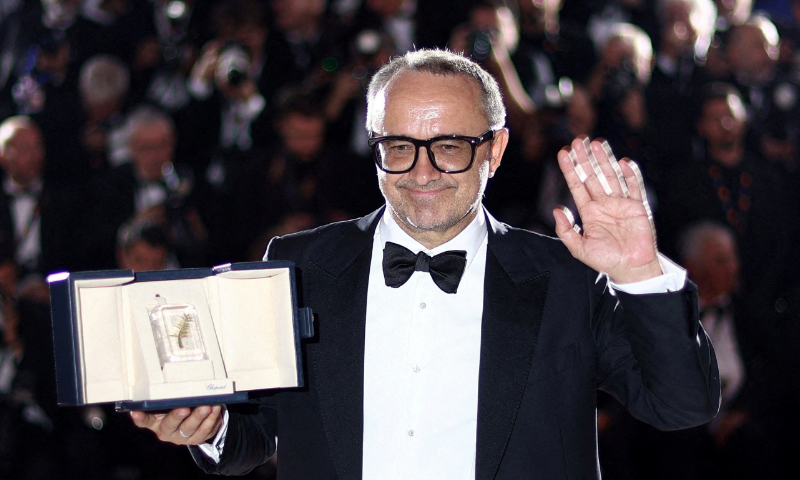
PARIS: Exiled Russian filmmaker Andrey Zvyagintsev has turned his attention to Russia’s war in Ukraine with Minotaur, a drama exploring military conscription, moral compromise and the human cost of conflict.
The film won the Grand Prix at this year’s Cannes Film Festival and has been selected as Russia-related cinema’s entry for the 2027 Academy Award for Best International Feature Film, according to the report.
Its release comes amid continuing debate over Russia’s ability to sustain troop numbers in a war that has left hundreds of thousands of people dead or wounded.
Story Focuses on Conscription and Moral Compromise
The film follows Gleb, a logistics company owner dealing with his wife’s affair while facing pressure from the local mayor to provide 14 employees for military service.
Unwilling to send his existing workers to the front, Gleb recruits new drivers by promising them high salaries, only to send them to the war.
One scene depicts Russian conscripts boarding a bus for the front as families say emotional goodbyes. Later, a roadside billboard celebrates an older recruit who has been killed in the conflict.
Zvyagintsev said he felt compelled to address the war because of its significance to Russia and his own connection to the country.
Filmmaker Says Art Can Challenge Propaganda
Zvyagintsev, 62, is internationally known for Leviathan and Loveless, both of which received Oscar nominations.
He left Russia in 2021 and now lives in France. The film, produced in France and spoken in Russian, is not expected to receive an official release in Russia because of its subject matter.
Discussing the difference between propaganda and artistic expression, Zvyagintsev said propaganda was a blunt instrument, while art worked through subtlety and could influence audiences over the long term.
The article cited 2026 polling by the Levada Center showing that support for Russia’s military campaign remained above 70%, while 67% of respondents also favoured peace negotiations.
Recruitment Campaigns Inspired the Screenplay
Russia has avoided another compulsory mobilisation since its politically damaging 2022 call-up, instead relying on recruitment campaigns and signing bonuses. Some analysts have said another mobilisation cannot be ruled out.
Zvyagintsev said online videos of Russian recruitment campaigns helped shape the screenplay.
Unable to film in Russia, he used a town in Latvia as a stand-in. He has not returned to Russia since suffering a severe bout of COVID-19 in 2021.
Critics have described Minotaur as one of his most direct examinations of Russia’s political and moral condition. The film is scheduled to open in French cinemas on October 14.
From French Thriller to Wartime Drama
The project originally began as a planned remake of Claude Chabrol’s 1969 thriller La Femme Infidele, which centres on a husband who suspects his wife of having an affair.
After securing the rights and beginning work on the screenplay in 2022, the invasion of Ukraine transformed the project.
The original suburban Paris setting became a bleak Russian town, while the domestic tensions were placed against the backdrop of war and military conscription.
In August, Russian authorities designated Zvyagintsev a “foreign agent,” a label used for public figures accused by the authorities of conducting anti-Russian activities with foreign support.
The filmmaker declined to comment on the potential personal or professional consequences of the designation.
Through Minotaur, Zvyagintsev seeks to portray individuals navigating the pressures of war and the difficult compromises it creates in everyday life.
