
Table of Contents
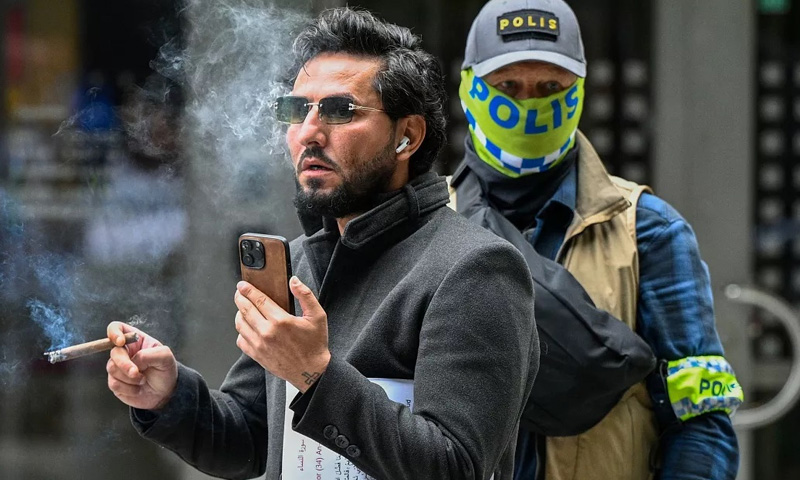
Salwan Momika, an Iraqi refugee and vocal anti-Islam campaigner, was shot and killed in Sweden late on Wednesday, just hours before he was due to receive a court verdict related to his controversial Quran-burning protests. The shooting took place in the city of Södertälje, where Momika had been living, and has prompted a murder investigation with five individuals arrested in connection with the crime.
Momika, aged 38, had been facing trial over accusations of inciting ethnic hatred following a series of public protests in which he burned copies of the Holy Quran. The court was set to rule on whether his actions constituted “agitation against an ethnic group,” a charge related to the public desecration of religious symbols. The Swedish court, however, has now postponed the ruling until February 3, citing the fact that Momika’s death requires additional time for legal proceedings.
The Shooting and Investigation
According to Swedish police, the shooting occurred inside a building in Södertälje. Police responded to reports of gunfire and discovered Momika with gunshot wounds. He was immediately taken to the hospital, where he later succumbed to his injuries. The authorities have since opened a murder investigation and confirmed the arrests of five individuals connected to the incident. However, it remains unclear if any of the detainees are directly linked to the shooting itself.
Media reports suggest that the killing may have been broadcast live on social media, though details are still emerging. The police have not released further specifics about the suspects or their motives at this stage.
Background on Salwan Momika’s Protests
Salwan Momika had garnered significant attention in Sweden and internationally for his participation in a series of protests where he burned copies of the Holy Quran, an act that many viewed as deeply offensive to Muslims. In 2023, he and fellow protester Salwan Najem were charged with “agitation against an ethnic group” for their actions, which included burning the Quran outside a Stockholm mosque.
These protests sparked outrage in several Muslim-majority countries, and relations between Sweden and the Middle East became increasingly tense. In July 2023, Iraqi protesters stormed the Swedish embassy in Baghdad on two separate occasions, even setting fires within the compound. The Swedish government condemned the desecrations of the Quran, while also defending its citizens’ constitutional rights to freedom of speech and assembly, which protect acts like protest demonstrations, including burning the Quran in certain contexts.
Diplomatic Tensions and Security Concerns
The impact of Momika’s protests went beyond the courtroom. The Swedish Security Service, Säpo, raised the country’s threat level in response to the Quran burnings, citing an increased risk of terrorism due to the growing anger from Middle Eastern countries. In addition, Sweden’s diplomatic relations with several nations became more strained, with heightened protests and calls for action against the Swedish government.
Despite the public outrage, Swedish authorities maintained that the act of burning the Quran could be seen as a form of free speech and critique of the religion. However, prosecutors clarified that depending on the circumstances—such as the context and the statements made by the protesters—the act could also be seen as incitement to ethnic hatred, a more serious charge with legal consequences.
In a notable development, a Swedish court convicted a man in October 2023 for inciting ethnic hatred after he burned a Quran in 2020. This was the first time a Swedish court had issued a conviction specifically for burning the Quran, marking a significant moment in the country’s legal treatment of such acts.
Future Legal and Political Implications
The killing of Salwan Momika raises several complex legal and political questions, especially given the sensitive nature of the Quran-burning protests. The investigation into his death will likely scrutinize whether it was related to his activism or if other factors were at play.
As Swedish authorities continue their investigation into the murder, the case is likely to fuel further debate on the limits of free speech, religious expression, and the role of the state in balancing these rights with the protection of public order. The upcoming court ruling, now delayed due to Momika’s death, will continue to be a point of legal contention, with implications for future cases of this nature in Sweden.
In the meantime, Swedish authorities and their counterparts in the Middle East will need to navigate the ongoing diplomatic fallout from the Quran burnings, which remain a sensitive issue in international relations.
