
Table of Contents
In a significant move underscoring the changing dynamics of Middle Eastern diplomacy, Saudi Defence Minister Prince Khalid bin Salman arrived in Tehran on Thursday. His high-level visit comes just days before a second round of nuclear talks between Iran and the United States, set to take place in Rome this weekend.
This marks one of the most high-profile visits between the two regional powerhouses since the 2023 China-brokered agreement that re-established diplomatic ties after years of enmity.
Message from King Salman Delivered to Ayatollah Khamenei
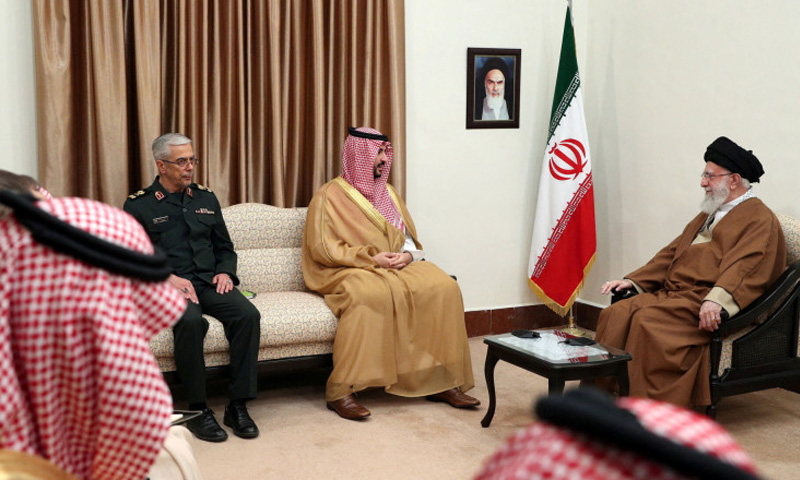
During his visit, Prince Khalid bin Salman met with Iranian Supreme Leader Ayatollah Ali Khamenei, delivering a message from Saudi King Salman bin Abdulaziz. While the contents of the message were not disclosed, Iranian state media confirmed the exchange and described it as part of ongoing efforts to enhance bilateral cooperation.
Khamenei, in remarks following the meeting, emphasized the importance of improved ties.
“Our belief is that the relationship between the Islamic Republic of Iran and Saudi Arabia is beneficial for both countries,” he was quoted as saying.
He also reiterated Tehran’s readiness to overcome challenges and build a constructive path forward with Riyadh, further affirming Iran’s commitment to regional dialogue and peacebuilding.
Nuclear Programme Talks to Resume in Rome
The visit comes just ahead of a critical round of Iran-U.S. talks regarding Tehran’s disputed uranium enrichment programme. The discussions in Rome represent a fresh attempt to ease tensions around Iran’s nuclear ambitions and revive elements of the 2015 Joint Comprehensive Plan of Action (JCPOA), which collapsed after the U.S. withdrawal in 2018.
China Slams U.S. Over 245% Tariffs Amid Growing Global Trade Tensions
While Saudi Arabia is not a direct party to the negotiations, it has long maintained a keen interest in the outcome, given the security implications for the wider Gulf region.
In a statement released on Saturday, Saudi authorities voiced support for the nuclear discussions:
“Saudi Arabia welcomes the efforts of Iran and the United States to resolve regional and international disputes,” said the statement from the Saudi Press Agency (SPA).
Military Relations See Positive Momentum
Alongside the political dialogue, military relations between the two former rivals are also reportedly improving. Following his meeting with the Saudi defence minister, Iran’s Armed Forces Chief of Staff Mohammad Bagheri noted the progress made since the Beijing agreement.
“Ties between the Saudi and Iranian armed forces have been improving since the Beijing agreement,” Bagheri said, according to Iranian state media.
This signals a shift toward security cooperation in a region long plagued by proxy conflicts, mistrust, and intermittent warfare. It also reflects growing confidence in the normalization process that began under Chinese mediation.
From Conflict to Cooperation: A New Phase in Middle East Diplomacy
The visit of Prince Khalid bin Salman represents a symbolic and strategic milestone in the broader process of Saudi-Iranian normalization. For years, the two nations found themselves on opposite sides of regional conflicts, from Yemen to Syria, fueling sectarian divides and supporting rival armed groups.
But since the March 2023 normalization deal brokered by China, both sides have worked to rebuild trust and open communication channels. Shared concerns over regional security, energy stability, and shifting global alliances have brought Riyadh and Tehran closer together.
With ongoing developments, including the upcoming U.S.-Iran nuclear talks, the Middle East may be entering a period of cautious diplomacy, where rivalries are tempered by shared strategic interests.
What Lies Ahead?
As Iran and the United States prepare to sit across the table in Rome, the presence of Saudi Arabia — even from the sidelines — adds a new layer to the evolving geopolitical chessboard.
The success of this weekend’s negotiations could be pivotal. A breakthrough on the nuclear front may unlock further economic, military, and diplomatic cooperation between Tehran and its Arab neighbors, while failure may rekindle the very tensions both sides are now working to move beyond.
