
Table of Contents
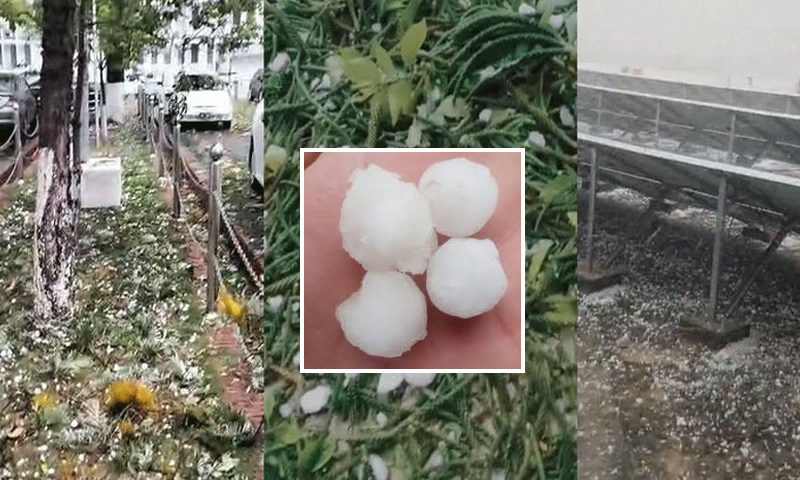
On Wednesday afternoon, Islamabad and several regions of Khyber Pakhtunkhwa (KP) were hit by a sudden and severe hailstorm that lasted around 35 minutes, leaving behind extensive destruction. The storm, accompanied by powerful winds and large hailstones, damaged vehicles, shattered windows, uprooted trees, and disrupted traffic in many areas. In Islamabad’s Tarnol locality, the storm was especially destructive, toppling trees and obstructing roads.
Citizens described the storm as both startling and intense, arriving without warning and transforming a warm spring day into a violent weather event. While some welcomed the brief relief from the heat, many were caught off guard and faced challenges navigating through flooded streets and blocked roads.
Flash Flooding Overwhelms Drainage Systems
In addition to the hail and wind damage, the torrential rain triggered flash flooding in several low-lying parts of the capital. Islamabad’s outdated and overwhelmed drainage infrastructure struggled to cope with the sudden deluge. Commuters reported being stranded in knee-deep water, with several vehicles stalling due to water entering engines.
The heavy downpour disrupted normal routines, flooding underpasses and service roads, and highlighting once again the city’s vulnerability to extreme weather.
Power Grid Takes a Major Hit
The Islamabad Electric Supply Company (IESCO) reported widespread power outages due to fallen electricity poles, broken wires, and tripped feeders. Areas like Golra, PHA, Pir Mehr Ali Shah, F-10 Markaz, National Police Foundation, Service Road East, and Tarnol were among the most affected.
Govt Freezes Fuel Prices to Fund Key Infrastructure Projects
Other impacted zones included Madina Colony, Pir Sohawa, Carriage Factory, Patriata, Upper Topa, and Airport Society. Feeders in Abu Bakar Shakrial, Khayaban-e-Sir Syed, Faizabad, Committee Chowk, Japan Road, Chontra, 502 Workshop, Sukho, Shah Allah Ditta, and Gujar Khan also experienced blackouts.
According to IESCO’s spokesperson, power restoration began swiftly, with engineering and construction teams deployed under the direct supervision of Chief Engineer Muhammad Naeem Jan. Despite the extent of the damage, power supply was restored in many areas within a few hours.
NDMA Issues Grave Climate Outlook: Heatwaves, Cyclones, and GLOFs Ahead
As the country recovers from the effects of the hailstorm, the National Disaster Management Authority (NDMA) has issued a stark climate warning for the upcoming months. Based on a three-month forecast (April to June), NDMA predicts that Pakistan will face extreme summer conditions, with higher-than-average temperatures and below-normal rainfall nationwide.
The NDMA warns that multiple heatwaves are expected to sweep through southern Punjab, Sindh, and Balochistan, where temperatures could soar up to 45°C. Cities such as Karachi, Larkana, Umerkot, Badin, Tharparkar, Matiari, Bahawalpur, and Rahim Yar Khan are expected to face severe heat stress.
Mountainous Regions Face Dual Threat
In the northern and northwestern regions, including Gilgit-Baltistan and Chitral, residents face a unique set of challenges. The combination of extreme heat and accelerated glacial melting may trigger Glacial Lake Outburst Floods (GLOFs), posing a significant risk to lives, infrastructure, and ecosystems in these high-altitude communities.
Murree, the Potohar plateau, and surrounding hilly areas are also under threat from wildfires, as dry conditions coupled with high temperatures increase the risk of fire outbreaks.
Potential Cyclones in May and June
In addition to inland heatwaves, the NDMA has flagged the potential formation of cyclones in the Arabian Sea during May and June. Coastal regions, particularly in southern Sindh and Balochistan, could be affected if any of these systems make landfall or come close to the shore, leading to high winds, heavy rains, and possible evacuations.
Agriculture and Water Security at Risk
The ongoing shift in weather patterns is expected to have far-reaching consequences for Pakistan’s agriculture sector. With reduced rainfall and extreme heat, crop yields could decline, further exacerbating food security issues in rural areas. Water scarcity, already a critical issue, may intensify as reservoirs fail to replenish and glacial water sources diminish.
NDMA Urges Public to Take Precautions
In light of the upcoming extreme weather, NDMA has urged citizens to avoid prolonged exposure to heat, especially during peak daylight hours. Authorities recommend staying hydrated, wearing light clothing, and using shaded or air-conditioned spaces when possible. For farmers, the agency is also planning awareness campaigns and assistance programs to help them manage the upcoming agricultural challenges.
