
Table of Contents
In a dramatic turn of events, SpaceX’s Starship rocket exploded shortly after launch on its eighth test flight, marking a significant setback in the company’s efforts to develop the next generation of spacecraft. The un-crewed mission, which took place from Texas, was intended to complete a one-hour flight and re-enter Earth’s orbit over the Indian Ocean. However, the rocket experienced a “rapid unscheduled disassembly” during ascent, as SpaceX described the catastrophic failure.
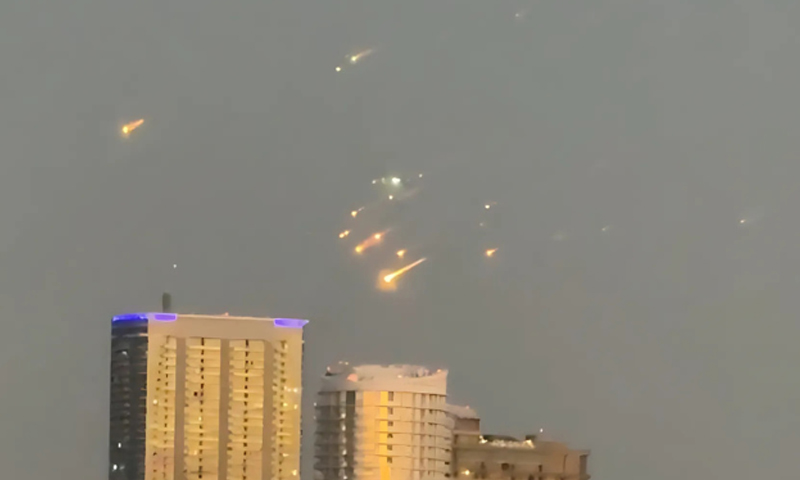
Debris Falls Over Caribbean Sea, Triggering Airport Closures
The explosion triggered warnings about falling debris over the Caribbean Sea, which raised concerns in nearby regions. In response to the incident, Miami International Airport (MIA) and Fort Lauderdale-Hollywood International Airport (FLL) experienced flight delays. The Federal Aviation Administration (FAA) immediately imposed temporary flight restrictions, with some departures from MIA being delayed due to debris falling over the Atlantic Ocean.
Greg Chin, Communications Director at MIA, confirmed the delays, stating, “Some flights at MIA are being delayed due to falling debris from the SpaceX launch over the Atlantic Ocean.” In addition to the delays, the FAA activated a “Debris Response Area,” temporarily slowing or halting aircraft departures in areas affected by the falling rocket parts. Fortunately, the FAA later reported that “normal operations have resumed” once the threat had passed.
Rocket Loses Contact and Falls Back to Earth
The 123-meter (403-foot) Starship rocket, which had been expected to ascend into space and re-enter Earth’s orbit, lost contact with ground control shortly after launch. While the Super Heavy booster, which provides lift-off support, successfully returned to the launch pad, the Starship spacecraft itself spiraled out of control. This led to its catastrophic failure.
The spacecraft, which had reached an altitude of nearly 90 miles, failed to release its mock satellites as planned and ultimately fell back to Earth. The exact location of its descent remains unclear.
SpaceX Acknowledges the Incident and Continues Investigations
Following the failure, SpaceX acknowledged the incident on X (formerly Twitter), stating, “During Starship’s ascent burn, the vehicle experienced a rapid unscheduled disassembly and contact was lost. Our team immediately began coordination with safety officials to implement pre-planned contingency responses.
“Chinese Scientists Develop World’s First Carbon-Based Microchip with Ternary Logic for AI Tasks
Despite the failure, SpaceX successfully recovered the first-stage booster using mechanical arms at the launch pad, a small win amid the overall setback. The company assured the public that it would analyze the data from the failed test to determine the root cause of the failure and make improvements for future flights.
SpaceX’s Ongoing Efforts and Future Plans
This test flight failure is part of SpaceX’s ongoing efforts to develop the Starship rocket, a spacecraft designed to support lunar and Martian missions. Although this marks the second significant failure for the program, the company remains committed to its goals. The previous Starship test flight, which took place nearly two months ago, also ended in failure when debris fell over the Turks and Caicos Islands. That incident was later attributed to a leaking fuel system that caused a fire and shut down the rocket’s engines mid-flight.
Despite these setbacks, SpaceX continues to refine the Starship design, incorporating improvements to its flaps, fuel system, and computer systems. The company also recently received approval from the FAA for subsequent launches, demonstrating its commitment to progressing with the Starship program.
Elon Musk, SpaceX’s CEO, tweeted in response to the failure, “Rockets are hard,” acknowledging the difficulties involved in such ambitious projects. However, the company’s long-term vision remains undeterred. SpaceX plans to continue testing the Starship rocket with the ultimate goal of landing astronauts on the Moon later this decade.
