
Table of Contents
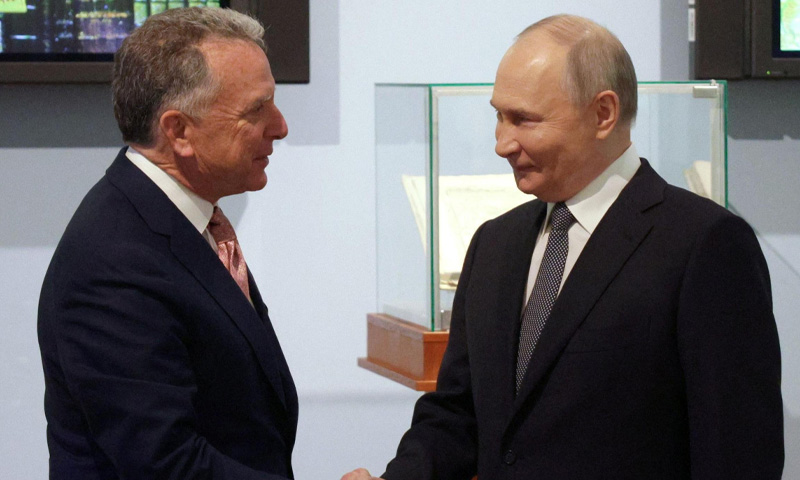
In a significant diplomatic development, U.S. President Donald Trump’s special envoy, Steve Witkoff, met with Russian President Vladimir Putin in St. Petersburg on Friday to discuss the stalled negotiations surrounding a ceasefire in Ukraine. The meeting, held in the city’s presidential library, comes as part of ongoing behind-the-scenes efforts to ease tensions between Washington and Moscow and potentially pave the way toward a broader peace deal.
Diplomatic Spotlight on Witkoff’s Growing Role
Steve Witkoff, a former real estate executive turned political envoy, has unexpectedly become a central figure in the Trump administration’s attempts to re-engage with Russia. This marks his third meeting with President Putin this year, underscoring the growing importance of informal diplomatic channels between the two nations.
Witkoff was seen leaving a hotel in St. Petersburg earlier in the day, accompanied by Kirill Dmitriev, Putin’s investment envoy. The optics of the meeting — shown prominently on Russian state television — suggest that both sides are treating the talks seriously, despite official Russian sources trying to play down expectations.
Trump Pushes for Action: “Russia Has to Get Moving”
As the death toll continues to climb in Ukraine, President Trump took to Truth Social to express frustration over the pace of negotiations, writing:
“Russia has to get moving. Too many people (are) dying, thousands a week, in a terrible and senseless war — A war that should have never happened, and wouldn’t have happened, if I were President!!!”
Trump has increasingly shown signs of impatience, even suggesting that his administration could impose secondary sanctions on countries that continue purchasing Russian oil — a strategic move aimed at pressuring Moscow to accelerate its willingness to reach a ceasefire.
Russia’s Conditions: Ceasefire Tied to Major Concessions
While Putin has stated he is “ready in principle” to agree to a full ceasefire, he insists that several core issues must be resolved first. These include:
- A formal commitment that Ukraine will never join NATO
- A reduction in the size of the Ukrainian military
- Full Russian control over the four Ukrainian regions it claims, despite only partial occupation
These conditions, viewed by Kyiv as unrealistic and unacceptable, have led to a diplomatic stalemate. Ukrainian officials argue that agreeing to these demands would amount to a capitulation and a betrayal of national sovereignty.
U.S.-Russia Ties: Backchannels and Pragmatic Diplomacy
Despite the tense geopolitical climate, recent talks between U.S. and Russian officials in Istanbul showed some signs of progress, particularly around the normalization of diplomatic missions. After years of mutual expulsions and deteriorating ties, both nations appear interested in rebuilding some aspects of their diplomatic relationship.
EU Halts Tariff Retaliation After Trump Pauses Trade Duties
This could be part of a larger strategic calculation, as tensions escalate globally — particularly with Iran and China, two key allies of Moscow.
Trump-Putin Meeting on the Horizon?
Kremlin spokesperson Dmitry Peskov acknowledged the possibility that Putin and Trump could meet face-to-face, though he emphasized that nothing has been scheduled yet. While they’ve spoken via phone since Trump returned to office in January for his second term, an in-person meeting would mark a dramatic escalation in diplomatic engagement.
Peskov cautioned against expecting immediate results from the Witkoff-Putin discussions, describing them as an opportunity for Moscow to express its “concerns,” rather than a venue for breakthroughs.
Wider Context: Iran and China Add Complexity
The U.S.-Russia dialogue comes at a time of heightened global friction. Witkoff is expected to travel to Oman next to participate in discussions regarding Iran’s nuclear program, another major flashpoint. Trump has issued stern warnings to Tehran, threatening military action if no deal is reached.
Simultaneously, tensions with China continue to mount, particularly over trade disputes and Beijing’s support for Russia. These intertwined issues illustrate the multifaceted nature of the global landscape facing U.S. policymakers.
Humanitarian Diplomacy: Prisoner Swaps Continue
Amid high-stakes negotiations, some humanitarian gestures have helped maintain a working dialogue. A recent prisoner exchange saw the return of American teacher Marc Fogel from Russian detention, following a previous February meeting between Witkoff and Putin.
Another swap this week involved Russian-American spa worker Ksenia Karelina, who had been sentenced to 12 years in Russia, in exchange for Arthur Petrov, accused by the U.S. of smuggling sensitive electronics to Russia’s military.
