
Table of Contents
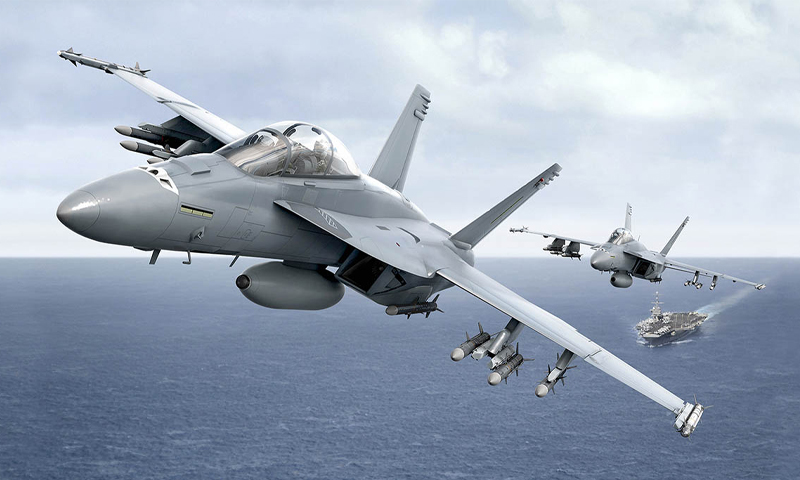
In a regrettable incident early on Sunday, the United States military mistakenly shot down one of its own fighter aircraft over the Red Sea, forcing both pilots to eject. The aircraft, an F/A-18 Hornet, was operating from the aircraft carrier Harry S. Truman at the time of the incident. The missile cruiser USS Gettysburg, one of the carrier’s escort ships, is reported to have fired on the plane by mistake, resulting in its downing. Thankfully, both pilots were rescued shortly after ejection, with one of them sustaining only minor injuries.
The U.S. Central Command (CENTCOM) issued a statement acknowledging the tragic error, calling it an “apparent case of friendly fire.” An investigation is underway to determine the exact circumstances of the incident and how such a mistake occurred. This incident has raised questions about the dangers inherent in complex military operations and the challenges of operating in such a tense and contested region.
Incident Overview: F/A-18 Hornet Shot Down in Friendly Fire
The downed fighter was part of a routine operation involving the Harry S. Truman carrier strike group, which had been conducting operations in the Red Sea. The F/A-18 Hornet was flying in the area when it was struck by a missile launched from the USS Gettysburg, a guided missile cruiser. Although the ship was escorting the aircraft carrier, the missile mistakenly targeted the Hornet, leading to the downing of the plane. Both pilots ejected before the aircraft crashed, and a rescue operation was quickly launched.
One pilot was rescued with minor injuries, while the other reportedly escaped with no major injuries. The exact details of their rescue have not been disclosed, but CENTCOM has confirmed that both were brought to safety and are expected to recover. The incident, while tragic, highlights the quick response and professionalism of U.S. military rescue teams.
Military Activity in the Red Sea: A Context of Heightened Tensions
The Red Sea has become a major flashpoint for military activity over the past year. This region has witnessed a growing number of military engagements involving the U.S. and its allies as they confront the threat posed by Yemen’s Houthi rebels. The Houthis, who are backed by Iran, have carried out a series of attacks against shipping vessels and commercial infrastructure in the region. These attacks have significantly raised tensions in the Red Sea, one of the world’s busiest shipping lanes.
In response to these growing threats, the U.S. military has increased its presence in the area, conducting operations to counteract Houthi missile and drone attacks. On Saturday, just a day before the friendly fire incident, U.S. forces targeted Houthi missile storage sites and command-and-control centers in the Yemeni capital of Sanaa. These operations are part of a broader strategy to degrade Houthi military capabilities and prevent further disruptions to global shipping in the region.
The U.S. military has also been actively involved in intercepting Houthi missiles and drones aimed at commercial ships and military vessels in the Red Sea. These efforts are aimed at protecting both military assets and civilian shipping from the growing threat of missile and drone attacks, which have been a consistent risk since the conflict in Yemen began in earnest.
The Risks of Complex Military Operations
The incident with the F/A-18 Hornet underscores the inherent risks involved in complex military operations, particularly in contested environments like the Red Sea. When multiple military units are operating in close proximity to one another, the risk of misidentification or communication breakdowns can lead to catastrophic accidents, as seen in this case. Friendly fire, while rare, is an unfortunate reality in modern warfare, especially in high-intensity conflict zones where forces are operating under extreme pressure.
The complexity of modern military operations, where air, sea, and land forces are often working together to achieve strategic objectives, increases the chances of accidental engagement between friendly forces. In this case, the USS Gettysburg was operating in a high-stakes environment, where split-second decisions can have fatal consequences. The friendly fire incident highlights the need for constant training, precise communication, and robust systems to prevent such mistakes.
Ongoing Investigations and Accountability
The U.S. military has launched an investigation to determine the cause of the friendly fire incident and to assess whether any procedural failures or equipment malfunctions contributed to the mishap. The investigation will focus on understanding the sequence of events that led to the missile launch from the USS Gettysburg and why it was targeted at a friendly aircraft.
Friendly fire incidents are taken very seriously by military authorities, and accountability is a critical component of such investigations. U.S. Central Command has promised a thorough inquiry into the circumstances surrounding the accident. The investigation’s findings will likely lead to changes in procedures, especially regarding identification protocols, communications, and coordination between military units in joint operations.
The Strategic Importance of the Red Sea
The Red Sea has long been a critical strategic waterway, providing vital access to the Mediterranean Sea through the Suez Canal. It is a key conduit for global trade, with hundreds of thousands of ships passing through each year. The waterway has also become a focal point for regional military operations due to the ongoing conflict in Yemen and the rising tensions between the U.S. and Iran, which backs the Houthi rebels.
The growing presence of military forces in the region is a response to the increasing risk posed by the Houthis and other regional threats. In recent years, the conflict in Yemen has spilled over into the Red Sea, affecting international shipping and increasing the likelihood of clashes between rival forces. U.S. military operations in the region are designed to ensure the free flow of commerce and to protect the interests of U.S. allies in the Middle East.
