
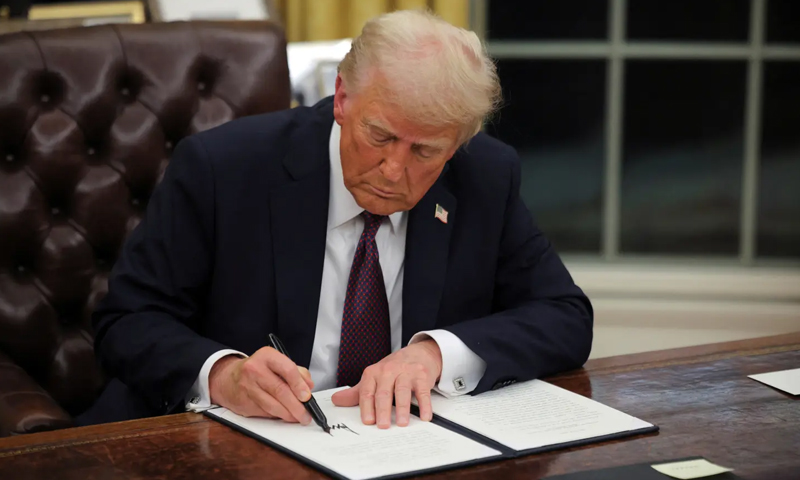
In a significant move that has sparked global criticism, the Trump administration has halted nearly all new foreign assistance funding. The decision, announced through an executive order issued this week, only spares military aid to Israel and Egypt, along with emergency food programs. The freeze is set to last for three months, during which time Secretary of State Marco Rubio will evaluate existing programs and decide whether to continue, modify, or terminate them.
The freeze has already raised alarms worldwide, particularly within the health and humanitarian sectors, where many initiatives rely heavily on US funding. Among the most affected is the President’s Emergency Plan for AIDS Relief (PEPFAR), a life-saving program that has been credited with saving 25 million lives since its creation in 2003 under the George W. Bush administration. The program, which provides critical treatment for HIV/AIDS patients, faces uncertainty as its funding is scheduled to expire in March 2025.
Impact on Global Health Programs
The freeze comes as a shock to many, particularly those working on global health initiatives. Jeremy Konyndyk, a former official with the US Agency for International Development (USAID), called the decision “lunacy,” warning that it could lead to the loss of many lives. “If implemented as written, a lot of people will die,” he added. Health programs, including vaccination campaigns and emergency medical clinics, are also among those affected by the freeze, raising concerns about the immediate and long-term impact on vulnerable communities worldwide.
Critics argue that the freeze disproportionately impacts those in need, particularly in regions that are already experiencing health crises. The move has led to a work-stop order for numerous aid projects, and humanitarian organizations warn of significant destabilization in regions already hit by conflict, food insecurity, and disease outbreaks.
Military Aid to Israel and Egypt Unaffected
Despite the sweeping freeze, military assistance to Israel and Egypt remains untouched. Both countries are among the largest recipients of US military aid, with billions of dollars allocated to them annually. A memo from Rubio emphasized that foreign military financing for Israel and Egypt, along with necessary administrative expenses, will continue without interruption. This exception has drawn criticism from some quarters, particularly given the controversial human rights records of both nations.
Advocates for human rights reforms have been calling for the US to leverage its military assistance to encourage improvements in governance and human rights practices in countries like Egypt and Israel. However, the freeze has made it clear that military aid to these two nations is a priority for the Trump administration, despite mounting criticism.
Concerns Over Humanitarian and Geopolitical Consequences
The decision to freeze foreign aid comes at a time when the US is the world’s largest donor of foreign assistance, with an estimated $60 billion spent in 2023. These funds support a wide range of programs, from health and education to anti-corruption efforts and disaster relief. The freeze threatens to disrupt these vital initiatives, potentially worsening crises in fragile states around the world.
Abby Maxman, the head of Oxfam America, criticized the freeze, stating that it represents a departure from the US’s long-standing, bipartisan approach to foreign assistance. “The Trump administration is abandoning the United States’ long-held bipartisan approach to foreign assistance, which supports people based on need, regardless of politics,” she said.
The freeze also raises questions about the US’s geopolitical priorities, especially regarding its relationship with Ukraine. Unlike Israel and Egypt, Ukraine—heavily reliant on US military assistance to defend itself against the ongoing Russian invasion—has not been exempted from the freeze. This omission has sparked debates about the administration’s focus on certain regions and its commitment to international security and humanitarian efforts.
A Shift in US Foreign Policy
Experts have warned that even a temporary freeze on foreign aid could have catastrophic effects on the most vulnerable populations. Humanitarian groups, like those working on food security, health emergencies, and economic stability, have expressed fears that this freeze could exacerbate the dire situations many people face in conflict zones and regions experiencing poverty and natural disasters.
“This order undermines America’s standing as a leader in humanitarian aid and development,” said a senior analyst at the Center for Global Development. With the freeze set to last at least three months, millions of people who depend on US-funded programs for food, medical care, and education are left in a state of uncertainty, awaiting clarity on the future of foreign assistance.
As global leaders and organizations continue to express concerns over the freeze, the international community remains in suspense, awaiting more details about the Trump administration’s long-term plans for foreign aid and its commitment to global humanitarian leadership.
