
Table of Contents
Introduction: The Tidy Myth of Law-Making
We tend to imagine law-making as a formal, predictable process: heated debates in parliament, a decisive vote, and a final, authoritative signature from the head of state. It’s a tidy picture of institutional order. However, in the complex world of Pakistani politics, this process can sometimes become a dramatic spectacle of constitutional clashes, political maneuvering, and even bizarre technical glitches. When the fundamental act of signing a bill into law becomes a point of contention, it reveals deeper fissures in the system.
This article will explore three surprising, real-life examples that reveal the messy, fascinating reality behind how laws are made and unmade in Pakistan.

1. The President Who Cried Sabotage
Takeaway #1: A President’s Staff Can Allegedly Defy His Command
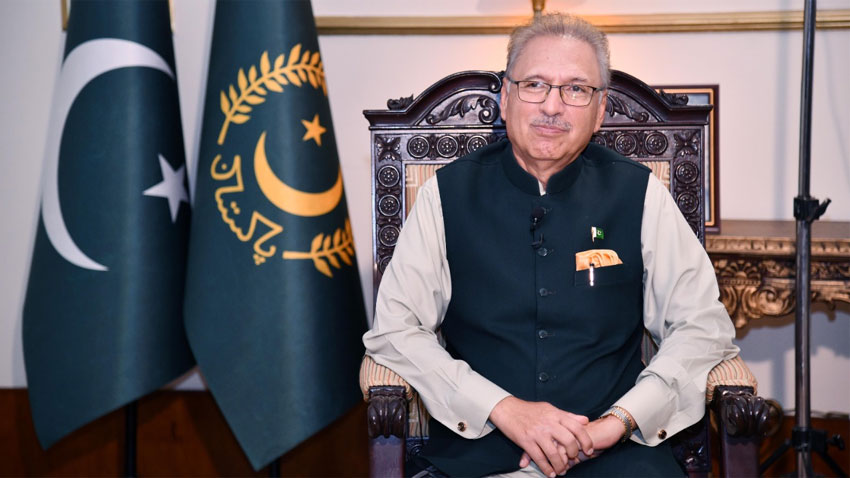
In August 2023, a constitutional crisis erupted when President Arif Alvi took to social media to make a startling claim regarding two highly sensitive bills: the Official Secrets Amendment Bill and the Pakistan Army Amendment Bill. He publicly stated that he disagreed with the laws, refused to sign them, and had explicitly instructed his staff to return the unsigned bills to parliament. His staff, he claimed, did the opposite.
President Alvi’s statement on X (formerly Twitter) was unprecedented:
“As God is my witness, I did not sign Official Secrets Amendment Bill 2023 & Pakistan Army Amendment Bill 2023 as I disagreed with these laws… However I have found out today that my staff undermined my will and command … I ask forgiveness from those who will be affected.”
This extraordinary claim from a head of state suggests a profound breakdown of command and procedure within the highest office. For a president to publicly accuse his own staff of undermining a direct constitutional order raises serious questions about institutional integrity and the chain of command at the very top of the government.
2. The Law That Became Law by Itself
Takeaway #2: A Bill Can Become Law Without Any Signature at All
The strangest part of the 2023 incident was the government’s response. According to the caretaker Law Minister at the time, President Alvi’s signature or lack thereof was ultimately irrelevant. The bills became law anyway. This was possible due to a specific provision in Pakistan’s constitution.
The constitution states that if the president does not either provide his assent to a bill or return it to parliament with specific objections within a 10-day timeframe, it automatically becomes law. The government argued that this is precisely what happened. President Alvi’s inaction, regardless of the alleged sabotage by his staff, triggered this “deeming” clause, which operates under Article 75 of the Constitution. He did not sign the bills, but he also failed to officially return them within the mandated period.
This counter-intuitive mechanism is designed to prevent a presidential veto from creating legislative gridlock. In this case, however, it led to a situation where laws were enacted not only without the President’s signature but also against his publicly and vehemently stated will.
3. The Ghost in the E-Filing Machine
Takeaway #3: A Constitutional Crisis Can Be Blamed on a “System Error”
More recently, in January 2026, another legislative crisis unfolded, this time between coalition partners PML-N and the PPP. The PPP staged a walkout from the National Assembly to protest an ordinance that appeared to have been promulgated without the required approval of President Asif Ali Zardari.

PPP lawmaker Naveed Qamar described the situation as a grave anomaly, stating it was the “first time in Pakistan’s legislative history” that an ordinance had been passed without the president’s signature.

As the PPP MNAs walked out, Law Minister Azam Nazeer Tarar initially attempted a more confrontational approach to placate his angry coalition partners. He insisted the president’s assent had been given and argued that the president had no choice in the matter anyway. Citing the law, Mr. Tarar insisted that Article 89 of the Constitution (governing ordinances) was subject to Article 48(1), under which the advice of the prime minister was binding on the president.
Facing a full-blown crisis with its key ally undeterred by this constitutional hardball, the government quickly reversed course. Law Minister Tarar confirmed the withdrawal of the contentious ordinance under Article 89(2)(b) of the Constitution and blamed the entire affair on a technical mistake within the government’s “e-filing” system. He explained that under the e-office system, the file was marked “approved” online, even though the physical ordinance never received a presidential signature.
This incident reveals a fascinating sequence of political brinkmanship followed by a hasty retreat. The “technical glitch” was not just a simple explanation for a blunder; it was a convenient off-ramp after a more aggressive constitutional argument failed to quell a political rebellion. It allowed the government to de-escalate a tense standoff by blaming a malfunctioning digital process rather than admitting to political overreach against a crucial coalition partner.
Conclusion: More Than Just Procedural Hiccups
These three episodes are more than just isolated administrative errors or political disputes. From a president claiming his staff defied him, to a law that passes itself, to a constitutional crisis blamed on a software bug, these events are symptoms of ongoing friction within Pakistan’s constitutional framework and political landscape. They expose ambiguities in procedure and highlight the intense power struggles that can turn the routine process of legislation into a national controversy.
When the very process of creating laws is subject to such drama and doubt, what does it mean for public trust in the institutions that govern them?
