
Table of Contents
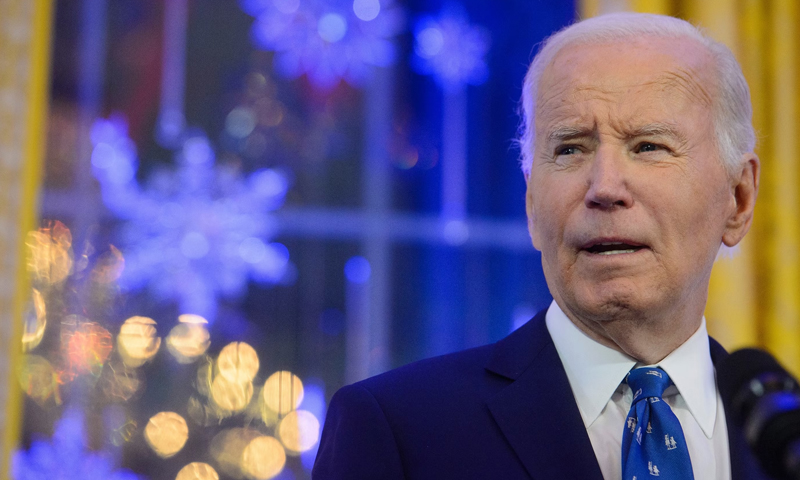
US President Joe Biden vetoed a significant piece of legislation on Monday that would have expanded the federal judiciary by adding 66 new judges to understaffed federal courts across the country. The bill, known as the JUDGES Act, was initially introduced with bipartisan support, reflecting a rare moment of agreement between the two major political parties. However, despite the broad support from judges, legal experts, and members of both parties, the bill met with resistance from Biden, who expressed concerns over its hasty passage and the lack of clarity regarding the need for new judgeships.
The JUDGES Act and Its Bipartisan Support
The JUDGES Act aimed to address the growing backlog of cases in federal courts, which has been exacerbated by increasing caseloads. If passed, the bill would have added 66 new trial court judges across 25 federal district courts in 13 states, including populous states like California, Florida, and Texas. The legislation was designed to be implemented over a series of waves, with new judges being appointed every two years through 2035.
In addition to the bipartisan backing from lawmakers, the bill also had the support of hundreds of judges from both parties, who publicly advocated for its passage. These judges argued that the federal courts were overburdened, with caseloads increasing by more than 30% since Congress last enacted significant reforms to expand the judiciary in 1990. The JUDGES Act was seen as a necessary step to alleviate this pressure and ensure the efficient functioning of the federal court system.
Biden’s Veto and Concerns Over the Bill
Despite the broad support for the bill, President Biden issued a veto, citing concerns over the rapid passage of the bill and the lack of comprehensive analysis regarding the necessity of additional judgeships. In a formal message to the Senate, Biden explained that the bill “hastily” created new judgeships without addressing key questions about the need for new judges and how these judges would be allocated across the country.
Biden’s veto followed a statement he made earlier in December, warning that he would reject the bill if it did not include a more thorough examination of the judicial needs in various districts. The president’s veto highlighted his concerns that the legislation was rushed through Congress without sufficient consideration of its long-term implications for the federal judiciary.
The Role of Politics in the Judiciary Expansion Debate
The JUDGES Act had initially gained widespread support from members of both political parties. However, as the bill made its way through Congress, partisan tensions began to emerge. Republican Senator Todd Young of Indiana, who sponsored the bill in the Senate, criticized Biden’s veto, calling it “partisan politics at its worst.” Young and other supporters of the bill argued that the legislation was essential to addressing the pressing needs of the federal courts and ensuring that judges were appointed to handle the growing caseloads.
The bipartisan nature of the bill had been central to its appeal, but the process was complicated by the political climate. The bill was first approved by the Democratic-controlled Senate in August with unanimous consent, but it languished in the Republican-controlled House until December. The delay was partly due to concerns from Democratic lawmakers about the timing of the bill’s passage, especially after the November 5 election of Republican President-elect Donald Trump. This timing raised fears that Trump would have the opportunity to make significant judicial appointments under the bill, further cementing his influence over the judiciary.
The Potential Impact of Trump’s Judicial Appointments
If the JUDGES Act had been enacted, President Trump would have had the ability to fill 22 permanent judgeships and three temporary judgeships over the course of his four years in office. This would have been in addition to the more than 100 judicial appointments he had already made, including three appointments to the US Supreme Court, which helped solidify a 6-3 conservative majority.
Trump’s judicial appointments were a central part of his legacy, and the expansion of the judiciary through the JUDGES Act would have given him further opportunity to shape the federal courts. This potential outcome raised significant concerns among Democratic lawmakers, who feared that the bill would disproportionately benefit Republican interests.
Biden’s Judicial Appointments and the Legacy of the JUDGES Act
Since taking office, President Biden has focused on judicial appointments as one of his top priorities. As of December 2024, Biden has surpassed Trump’s total number of judicial appointments, with 235 judges confirmed to the federal bench. However, Biden’s appointments have focused more on appellate judges, with only one US Supreme Court appointment during his tenure. Despite surpassing Trump in the total number of judicial appointments, Biden’s influence on the judiciary has been more limited in terms of shaping the ideological balance of the courts.
The veto of the JUDGES Act reflects Biden’s careful approach to judicial appointments, prioritizing thorough vetting and analysis of the federal court system’s needs. While the bill’s supporters argued that the expansion was necessary to address mounting caseloads, Biden has emphasized the need for a more strategic and measured approach to judicial reform.
Looking Ahead: The Future of Judicial Reform
The veto of the JUDGES Act does not mean the issue of federal court expansion will go away. The need for judicial reform and the expansion of the federal judiciary will likely remain a topic of debate in future legislative sessions. With a growing backlog of cases and the increasing pressure on federal courts, lawmakers from both parties may continue to push for solutions to address these challenges.
The future of judicial expansion in the US will depend on the ability of Congress to craft bipartisan solutions that address the needs of the federal courts while balancing political concerns. While the veto of the JUDGES Act represents a setback for some lawmakers, it has also highlighted the complexity of reforming the federal judiciary in an era of heightened political polarization.
