
Table of Contents
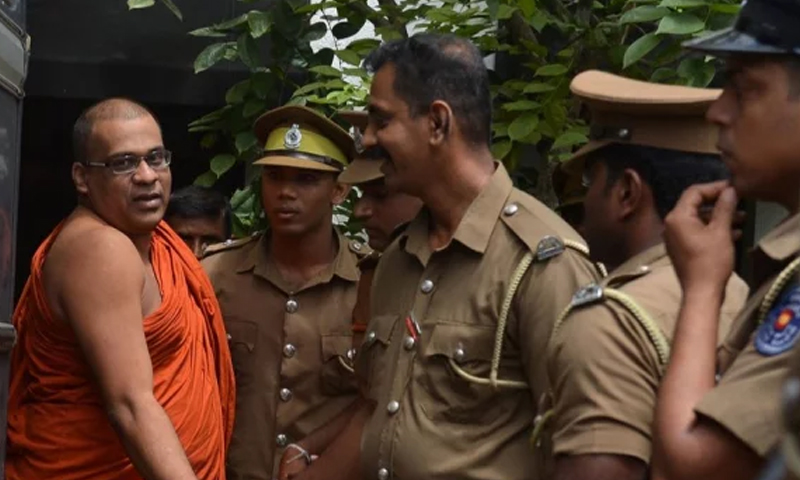
Sri Lankan Buddhist Monk Galagodaatte Gnanasara has been sentenced to nine months in prison for his controversial remarks made in 2016, which were found to be inflammatory and incited religious hatred against the country’s Muslim community. This marks his second imprisonment for similar charges, after previously being jailed for stoking anti-Muslim sentiment in Sri Lanka.
A Firebrand Monk with a History of Controversy
Galagodaatte Gnanasara is a notorious figure in Sri Lanka, widely known for his strong anti-Muslim rhetoric and his association with nationalist Buddhist movements. A leader of the Bodu Bala Sena (BBS), an extremist Buddhist group, Gnanasara has frequently been accused of exacerbating religious tensions in Sri Lanka, particularly between the Sinhalese Buddhist majority and the Muslim minority, which makes up just over 10% of the nation’s 22 million people.
The monk was sentenced by a court on Thursday to nine months in jail for remarks he made in 2016, which were deemed as insulting to Islam and responsible for inflaming religious disharmony in the country. These comments were part of his broader campaign against Sri Lanka’s Muslim community, which has faced increasing discrimination and violence in recent years.
Previous Legal Troubles: A Pattern of Controversy
Gnanasara’s latest sentence is not the first time he has faced legal repercussions for his divisive rhetoric. In 2018, he was convicted and sentenced to six years for contempt of court and intimidating the wife of a missing cartoonist. However, after spending just nine months in prison, he was granted a presidential pardon by then-President Maithripala Sirisena, which sparked significant public outrage at the time.
In 2020, Gnanasara was also sentenced to four years in prison for his inflammatory speeches targeting Sri Lanka’s Muslim population. However, he was granted bail while appealing the sentence. His return to the public eye was marked by his continued support of nationalist causes and his close ties to the political elite.
Ties to Former President Gotabaya Rajapaksa
Galagodaatte Gnanasara’s political influence has been closely linked to the powerful Rajapaksa family. He is a close ally of former President Gotabaya Rajapaksa, who appointed him in 2021 to head a panel for legal reforms aimed at promoting religious harmony in Sri Lanka. However, the irony of this appointment was not lost on critics, with opposition lawmaker Shanakiyan Rasamanickam labeling it as the “definition of irony.”
At the time of Gnanasara’s appointment, his controversial past was well-known, yet he was entrusted with a task designed to improve religious relations in the country. The decision sparked widespread backlash from various religious and political groups, particularly given his previous record of divisive public statements.
Despite his appointment, Gnanasara’s influence waned following the economic crisis that led to massive protests in 2022. The fall of Gotabaya Rajapaksa’s government after months of protests contributed to a shift in the political landscape, and Gnanasara once again found himself in the spotlight for his provocative actions. His recent conviction is a direct consequence of this decline in political patronage, with the monk facing further prosecution for his previous actions.
Impact on Sri Lanka’s Religious Landscape
Gnanasara’s sentencing comes at a time when religious tensions remain high in Sri Lanka. Over the years, his rhetoric has contributed to a climate of fear and division between Sri Lanka’s Sinhalese Buddhist majority and the Muslim community. While Sri Lanka has a long history of religious coexistence, the rise of nationalist groups like BBS has made it increasingly difficult to maintain peaceful relations between different religious communities.
His inflammatory comments, along with the actions of other radical figures, have often led to violent clashes and have sparked widespread protests. The rise of extremist Buddhist nationalism in the country has been linked to growing anti-Muslim sentiments, including attacks on Muslim-owned businesses, mosques, and even individuals.
Despite the legal consequences he faces, Gnanasara’s influence within certain segments of Sri Lankan society remains significant. His outspoken views and high-profile political connections continue to shape the discourse surrounding religious identity and political power in Sri Lanka.
