
Table of Contents
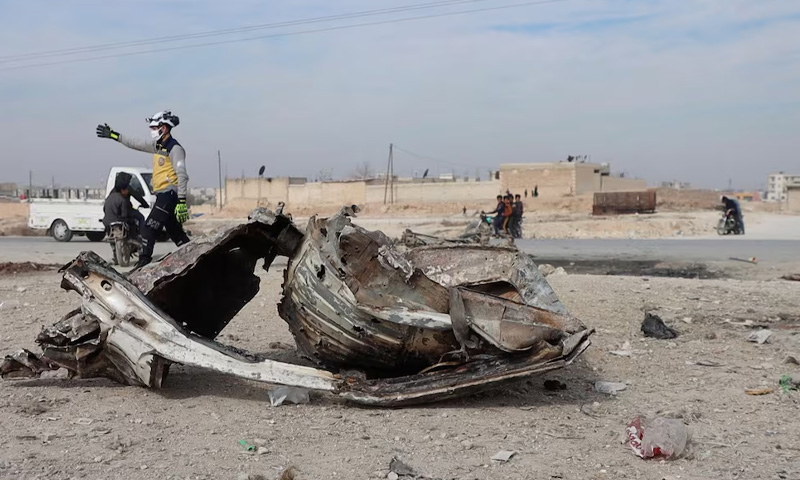
A car bomb explosion in the northern Syrian city of Manbij on Monday killed at least 15 people, marking the deadliest attack in the region since the ousting of Bashar al-Assad in December. This bombing, the second in just three days, underscores the increasing volatility and bloodshed gripping the area, which has been a hotbed of violence amid the Syrian civil war.
The victims, identified by the civil defense rescue service, were predominantly women, with 14 out of the 15 victims being female, along with one male. Many of those killed were agricultural workers, who were in the vicinity at the time of the explosion. In addition to those confirmed dead, 15 other women were reported injured, with some in critical condition. The local authorities have warned that the death toll could rise further as rescue operations continue and more bodies are recovered from the wreckage.
Rising Violence in Northern Syria
The attack occurred in the city of Manbij, located about 30 kilometers from the Turkish border. This area has experienced significant shifts in control during the ongoing civil war. Manbij was previously under the control of Kurdish-led Syrian Democratic Forces (SDF), who captured the city from the Islamic State (ISIS) in 2016. However, in December 2024, Turkey-backed groups seized control of the city from the SDF, deepening the already complex conflict in northern Syria. The rapid escalation of violence since then has led to increasing tensions among various factions vying for power in the region.
This latest bombing follows another deadly explosion on Saturday, which killed four civilians and injured nine others, including children. These recent attacks come as local authorities warn of a potential surge in violence, especially given the fragile security situation in the region.
No Claim of Responsibility
As of now, no group has claimed responsibility for the attack in Manbij. However, the Kurdish-led Syrian Democratic Forces (SDF) swiftly condemned the bombing, pointing fingers at Turkey-backed factions operating in the area. The SDF accused these factions of using such violent tactics, including bombings, to intimidate local populations and maintain their control in strategically important areas of northern Syria.
Turkey’s involvement in northern Syria has been a controversial and divisive issue. Ankara has long been at odds with the Kurdish groups in the region, labeling some of them as terrorist organizations due to their links with the Kurdistan Workers’ Party (PKK), which has waged a decades-long insurgency in Turkey. The shifting alliances and fluid control over territories like Manbij make it increasingly difficult to predict where the next explosion of violence may occur.
The Broader Context of Syria’s Ongoing Civil War
The attack on Manbij comes against the backdrop of a deepening crisis in Syria. Since December 2024, the Hayat Tahrir al-Sham (HTS) group, an extremist jihadist organization, has gained control over much of the country, further complicating efforts to bring stability to the region. The group’s leader, Ahmed al-Sharaa, was recently declared Syria’s transitional president, signaling a new phase in the conflict, one that continues to be marked by infighting between various rebel groups, foreign military interventions, and a collapsing civilian infrastructure.
In addition to these challenges, the ongoing humanitarian crisis in northern Syria has led to the displacement of thousands of civilians, further exacerbating the region’s already dire situation. With a fragile peace at risk, many fear that attacks like the one in Manbij will continue, leading to more casualties and further destabilizing a country that has already been ravaged by years of conflict.
The Impact on Local Communities
The attack has had a profound impact on the local population in Manbij and surrounding areas. Many of the victims were agricultural workers, whose livelihoods are dependent on the region’s agricultural production. With the city now under Turkish-backed control, tensions between local residents and the occupying forces have been mounting, making civilians increasingly vulnerable to violence.
Rescue teams continue to comb through the wreckage, and medical personnel are doing everything they can to treat the injured. As the situation remains fluid, there are fears that the death toll will continue to rise in the coming days.
The rising frequency of bombings and other violent attacks in northern Syria paints a grim picture of the region’s future. Local authorities, international organizations, and humanitarian groups are calling for a renewed focus on peace efforts to end the cycle of violence and help rebuild the war-torn country. However, with no end to the fighting in sight, many remain skeptical that true peace is achievable in the near future.
