
Table of Contents
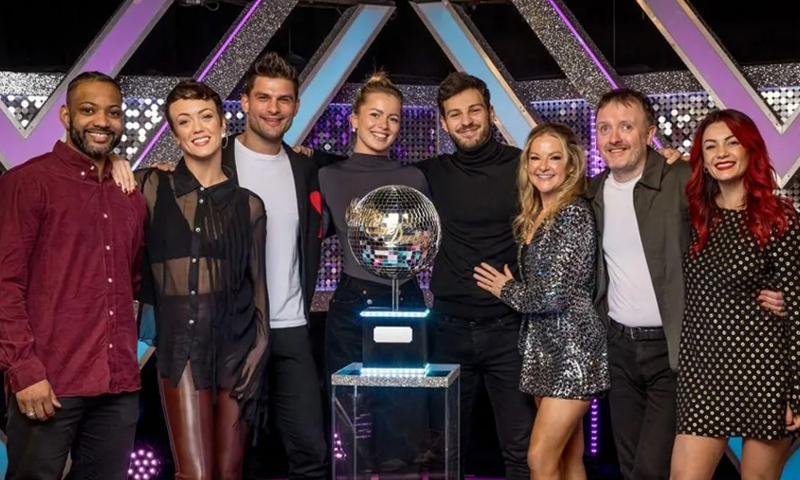
Chris McCausland, a comedian who is blind, has made history by winning the 22nd series of Strictly Come Dancing, becoming the first blind contestant ever to take part in the popular BBC One dance competition. Along with his professional dance partner, Dianne Buswell, McCausland triumphed over 14 other couples, clinching this year’s glitterball trophy. The pair’s victory has been hailed as a significant moment in both the world of dance and the disability community.
McCausland, 47, lost his sight to retinitis pigmentosa, a degenerative eye condition, in his 20s. Despite this, he defied expectations and proved that a blind person could achieve incredible success on the dance floor. He was praised throughout the series for his determination and ability to learn complex routines alongside Buswell.
Overcoming Challenges on the Dance Floor
McCausland’s journey on Strictly was one of both inspiration and hard work. To learn the routines, McCausland used a unique method—he would get down on his hands and knees to feel Buswell’s feet and legs, helping him understand the movement patterns she was guiding him through. He even humorously described how Buswell would have to physically move his limbs, likening the experience to being a “bendy spidermen toy.”
This innovative approach allowed him to master difficult routines, but it wasn’t without its challenges. McCausland admitted that some dances were more difficult than others. The paso doble, for example, proved to be particularly tricky, with Buswell still working to explain posture to McCausland up until Wednesday, just days before their final performance. “You get four days to learn these routines, and on Wednesday she was still trying to explain to me what the posture was meant to be,” McCausland shared.
Emphasizing the Importance of Changing Attitudes
While McCausland was widely admired for his ability to perform under such unique circumstances, he does not see himself as an inspiration simply because he is blind. “I don’t think blind people need inspiring,” McCausland stated. “The biggest benefit to everybody you can make is changing people’s attitudes towards disabilities.” His focus is on raising awareness and changing how society views people with disabilities rather than positioning himself as a role model.
McCausland’s victory is a testament to what can be achieved when expectations are shifted and barriers are broken down. He noted that it was more about changing the general public’s perceptions of what is possible for people with disabilities. “It’s changing everybody else’s attitudes to what is possible, raising people’s expectations, because that’s where the difference is,” he explained.
The Blackout Moment That Went Viral
One of the most memorable moments from McCausland and Buswell’s journey on Strictly came during their performance of their couple’s choice routine to John Lennon’s “Instant Karma.” The routine featured a “blackout moment” designed to simulate McCausland’s experience with blindness. The lights on stage were turned off, and viewers were left in darkness before the couple continued dancing in the absence of light. The powerful moment struck a chord with audiences and judges alike, going viral on social media. It was a bold and innovative way to share McCausland’s experience of blindness, and it was received with great appreciation. McCausland was delighted that the idea was not seen as a gimmick but as a meaningful expression that resonated with viewers.
The Impact on the Disability Community
McCausland’s victory also had a profound impact on the disability community. Sense, a national charity for people with complex disabilities, praised his win as a step forward in inclusion, saying it would lead to many more disabled people being included in major TV shows. Similarly, Step Change Studios, which offers ballroom dance classes for blind people, reported an increase in interest in their programs, attributing it to the positive impact McCausland has had. Dr. Rashmi Becker, the founder of Step Change Studios, mentioned, “We’ve seen an increase in the number of people wanting to join our blind ballroom programme—so much so that I can’t respond quickly enough!”
McCausland’s success has proven that dance is a form of expression that transcends physical limitations, and his efforts have inspired others to explore and participate in the arts, regardless of their abilities.
Looking Ahead to the Future
Though McCausland will not be participating in the Strictly live tour due to his upcoming stand-up comedy tour, which will span over 250 dates across the UK, he has not ruled out dancing in the future. He mentioned that while he is not a dancer in the traditional sense, he might collaborate again with Dianne Buswell, perhaps even performing again over the summer.
“I can’t dance now. I can dance with Dianne,” he joked, adding, “So maybe in the future, me and Dianne can do something together.”
A Journey of Unlikely Triumph
McCausland’s victory on Strictly Come Dancing is not just about dancing—it’s about breaking down barriers, changing perceptions, and challenging the limits of what is possible. His win has proved that with determination, creativity, and support, anyone can achieve greatness, regardless of their abilities. As McCausland continues with his stand-up career and prepares for new projects, his journey will undoubtedly inspire many to rethink what people with disabilities can achieve. His legacy on Strictly is about more than just winning a trophy; it’s about transforming the way society views disability and encouraging everyone to challenge the status quo.
