
Table of Contents
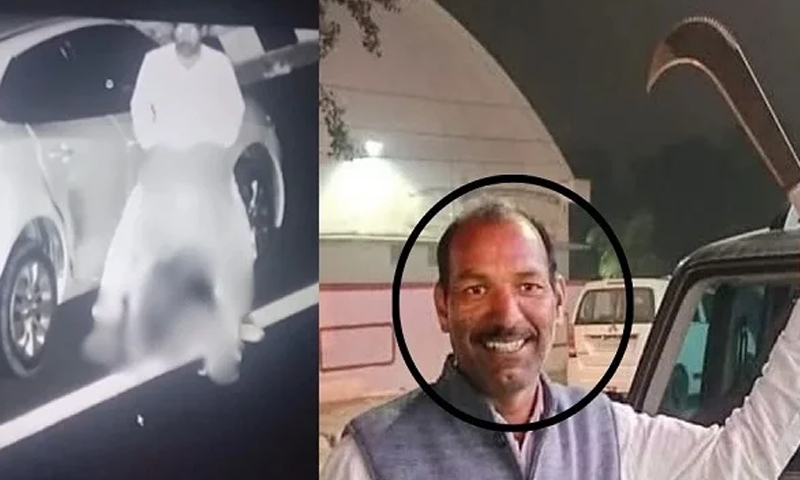
Before May 2025, Manoharlal Dhakad was a relatively obscure figure in Indian politics, known primarily in his village of Bani in Mandsaur district, Madhya Pradesh. His name, however, gained significant traction after a scandalous video featuring him in a compromising position with a woman on the Delhi-Mumbai Expressway surfaced on social media in late May.
The Viral Video Incident
On May 13, 2025, a CCTV camera along the Delhi-Mumbai Expressway captured the video that would change Dhakad’s life. The footage depicted him engaging in an inappropriate act with a woman in a public place. Though the video was recorded discreetly, it quickly went viral by the end of May, leading to intense public scrutiny and media attention. The video’s viral nature brought the issue to the national stage, exposing Dhakad’s personal life to a level of attention he had never experienced before.
Dhakad’s Political Connections: Ties to BJP
Manoharlal Dhakad’s sudden rise in the media spotlight also revealed his connections to the Bharatiya Janata Party (BJP). During the district panchayat elections, Dhakad was instrumental in securing a victory for the BJP, which added to his prominence in local politics. Photos of Dhakad with senior BJP leaders, including Deputy Chief Minister VD Sharma, emerged around the same time as the viral video, sparking further speculation about his affiliations.
Despite this, the BJP has distanced itself from Dhakad after the video surfaced. The Mandsaur BJP district president, Rajesh Dixit, clarified that while Dhakad had registered online for party membership, he was not an active member of the BJP. This statement came in response to the growing public concern about the implications of the scandal for the party.
Legal Action and Arrest
Following the video’s release, Manoharlal Dhakad was arrested on May 25, 2025, on charges under the Bharatiya Nyaya Sanhita (BNS), which governs public morality and decency laws. Specifically, the charges included public obscenity and creating a public nuisance. However, due to the relatively weak nature of the charges, Dhakad was granted bail within 24 hours, much to the disappointment of many who felt the incident warranted a more severe legal response.
Administrative Response: NHAI Takes Action
In the wake of the video’s leakage, the National Highway Authority of India (NHAI), which manages the Delhi-Mumbai Expressway, took swift action. The authority dismissed three employees from MKC Infrastructure Company, which had a contract with NHAI for the expressway’s maintenance. The dismissed employees were accused of leaking the video to the public.
Reports suggest that Dhakad had been blackmailed by these employees for Rs 80,000, which he allegedly refused to pay. In retaliation, they reportedly leaked the video as a form of extortion. This development further complicated the scandal, turning the attention not just to Dhakad’s actions but to the roles played by others in facilitating the video’s release.
US to Ban Visas for Foreign Officials Who Censor Americans, Rubio Announces
BJP’s Disassociation and Internal Action
Amid the controversy, the BJP swiftly distanced itself from Manoharlal Dhakad, reiterating that he was not an active member of the party. Although his wife, Sohan Bai, is a prominent district panchayat member and village head (Sarpanch), Dhakad’s personal actions have led to his political isolation. The party sought to make clear that the scandal was a personal matter unrelated to its official politics.
Furthermore, Dhakad’s role in the Dhakad Mahasabha (a community association) was also put under scrutiny. The national president of the Dhakad Mahasabha reportedly issued instructions for Dhakad’s removal from his position as the Youth Union president. This move was seen as another attempt to distance the community organization from the growing controversy.
The Broader Discussion: Ethics, Privacy, and Accountability
The entire incident has raised several important questions about ethics, privacy, and accountability in the digital age. While personal privacy is a fundamental right, the viral nature of videos and images shared on social media has made it increasingly difficult for public figures to maintain their personal lives out of the public eye.
Moreover, the situation underscores the complex relationship between personal conduct and political affiliations. Dhakad’s involvement with the BJP and his local prominence initially shielded him from broader public scrutiny, but the controversy has now thrust him into the limelight in ways that no one anticipated.
This incident serves as a reminder of the power that viral media has to shape reputations and careers, often without regard for the true context or facts surrounding a situation. It also highlights the potential for exploitation and blackmail in the age of digital surveillance.
