
Table of Contents
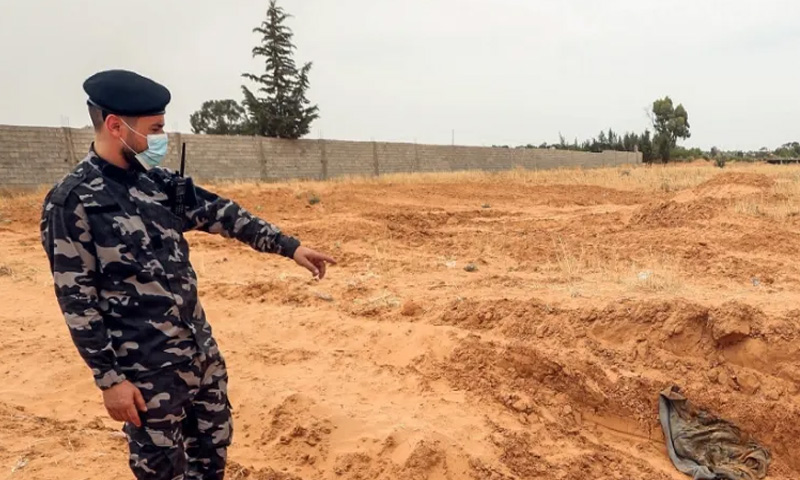
Libyan authorities made a chilling discovery over the weekend when they uncovered a mass grave containing the bodies of 28 sub-Saharan migrants in the southeastern district of Kufra. This discovery was made during a raid on a notorious human trafficking site, where authorities had already rescued 76 migrants who had been subjected to severe mistreatment and torture. The raid took place on Saturday night, and the findings serve as a stark reminder of the dire situation faced by migrants in Libya as they attempt to escape poverty, conflict, and oppression.
The operation, which targeted a trafficking gang notorious for its cruelty, uncovered the extent of human rights abuses perpetrated against the migrants, many of whom were detained in inhumane conditions. According to the Libyan Attorney General’s office, the individuals detained at this trafficking site were subjected to extreme forms of torture and humiliation. The raid resulted in the arrest of three people: one Libyan national and two foreign nationals.
Human Trafficking in Libya: A Growing Crisis
Libya’s long-standing political instability, which has persisted since the 2011 NATO-backed uprising that ousted the late dictator Muammar Gaddafi, has created a fertile ground for human traffickers and smugglers to operate unchecked. The country has effectively become a hub for the exploitation of migrants, particularly those from sub-Saharan Africa, who attempt to cross the Mediterranean Sea in search of better opportunities in Europe.
Despite efforts by international organizations to address these issues, human trafficking in Libya remains rampant, and migrants are often caught in a cycle of abuse and exploitation. Migrants are lured to Libya with promises of work and a path to Europe, but once they arrive, they are frequently detained in overcrowded and unsanitary conditions. Many are subjected to physical abuse, forced labor, and sexual exploitation.
The discovery of the mass grave in Kufra is the latest in a series of horrific events highlighting the vulnerability of migrants in Libya. Last month, authorities arrested two individuals involved in the detention and extortion of 263 irregular migrants in the El Wahat region, where the traffickers demanded ransoms from the families of the detainees. These ransom demands ranged from $10,000 to $17,000, depending on the nationality of the migrant. The detained migrants were reportedly forced to call their families and ask for money to secure their release, often enduring physical violence if the demands were not met.
The Mass Grave and Its Disturbing Implications
The recent discovery of the mass grave in Kufra has sent shockwaves through the international community. According to reports, the bodies of the 28 migrants were found in close proximity to the site where they had been held captive and tortured. The migrants, who were mostly from sub-Saharan African countries, were likely victims of a gang that systematically detained and exploited them.
Photos shared alongside the official statement from the Attorney General’s office show the emaciated bodies of the victims, their faces, limbs, and backs marked with scars from the brutal treatment they endured. These images paint a harrowing picture of the inhumane conditions faced by migrants who attempt to pass through Libya on their way to Europe.
While the exact circumstances surrounding the deaths of these migrants are still unclear, it is likely that they died as a result of the physical and psychological toll of the abuse they endured. Their bodies, now buried in a mass grave, serve as a tragic reminder of the horrors that many migrants face in Libya, where human trafficking and smuggling syndicates operate with impunity.
Libya’s Role as a Key Migration Route
Libya’s role as a major transit point for migrants attempting to reach Europe has drawn increasing international concern. Located just 300 kilometers from Italy, Libya has become a key departure point for those fleeing conflict, poverty, and persecution in sub-Saharan Africa. Many migrants attempt the perilous journey across the Mediterranean, often crammed into overcrowded boats and subjected to extreme risks of drowning, dehydration, and exploitation by smugglers.
The International Organization for Migration (IOM) has repeatedly warned about the dangers faced by migrants traveling through Libya. According to the IOM, the country’s lack of effective governance, coupled with the continued presence of armed militias and human traffickers, has created a nightmare for migrants. In March of the previous year, a mass grave containing at least 65 migrant bodies was discovered in southwest Libya, further illustrating the extent of the crisis.
The IOM has also pointed out that the inadequate response from both Libyan authorities and the international community to address these human rights violations has resulted in a sharp increase in migrant deaths and appalling living conditions for those caught in Libya’s migration routes.
A Call for Action and International Responsibility
The discovery of this mass grave, along with the ongoing abuse of migrants in Libya, underscores the urgent need for stronger international efforts to address human trafficking and migrant exploitation in the country. Human rights organizations have called on Libyan authorities to take more decisive action to dismantle trafficking networks and provide better protection for migrants. However, political instability and ongoing conflicts make it difficult for the government to implement effective reforms.
International organizations, including the United Nations, continue to press for a coordinated response to protect vulnerable migrants and ensure that traffickers are held accountable. As Libya remains a key departure point for those seeking a better life in Europe, it is clear that the migrant crisis in the country will not be resolved without a comprehensive international strategy to address both the immediate dangers faced by migrants and the broader political and economic challenges facing Libya itself.
The mass grave in Kufra serves as a stark reminder of the human cost of Libya’s migration crisis and the need for urgent action to prevent further loss of life. It is a tragedy that highlights the ongoing suffering of migrants in the region and the broader global failure to protect those seeking refuge from violence and poverty.
