
Table of Contents
In the midst of high regional tensions between India and Pakistan, a series of fabricated news reports broadcast by major Indian news outlets on May 8 sparked a wave of public criticism and rare moments of self-reflection from within India itself. The disinformation, which included outrageous claims of military triumphs and fake surrenders by Pakistani leadership, was widely condemned as reckless propaganda intended to inflame nationalist sentiment.
According to TRT Global, an international news agency, the stream of disinformation was “coordinated” and came not from social media trolls, but directly from mainstream Indian newsrooms with national reach. “The coordinated disinformation campaign on 8th May designed to inflame nationalist sentiment did not come from trolls but a stream of misleading content played from mainstream media networks with massive national audiences,” TRT reported.
Apologies and Public Shame Follow Online
One of the most notable reactions came from Indian author and commentator Basant Maheshwari, who issued a public apology for unknowingly amplifying false claims. “I have NEVER deleted tweets but today I am deleting all tweets that I made without verifying the claims of our Indian media channels. I feel sad not because of tweeting but more so because I (wrongly) believed what I saw!” he wrote on X (formerly Twitter), reflecting a rare instance of accountability among public figures.
A Flood of Fabricated Claims from Indian Channels
Some of the most egregious examples of misinformation include:
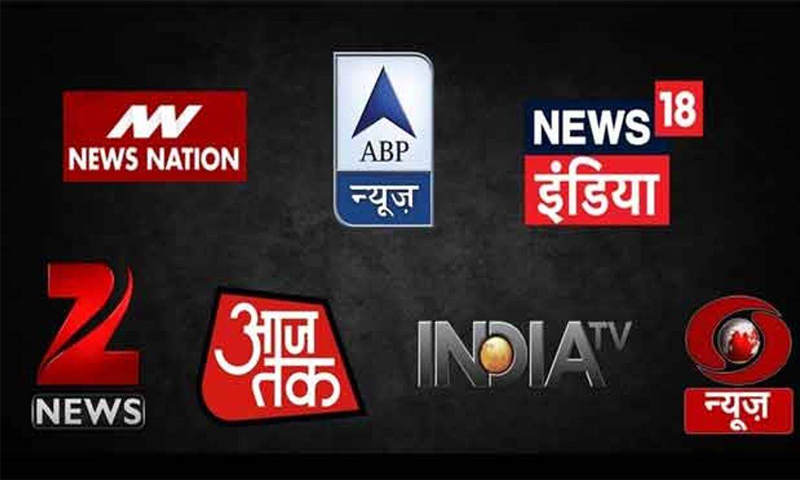
- DNA India posted on its official social media account that “India attacks Pakistani Capital Islamabad!”—a completely baseless and sensationalist claim that was later deleted without explanation.
- Zee News went even further, claiming that “Pakistan’s Capital Islamabad has been occupied!”, contributing to the online frenzy before quietly removing the post.
- Aaj Tak, another major channel, simulated a fictional military strike on Karachi Port. The broadcast included theatrical visuals and breaking news banners, misleading viewers into believing a real-time offensive was underway.
- India Today alleged that Indian forces had launched simultaneous assaults on both Lahore and Karachi, further fueling panic and confusion.
- Times Now Bharat joined the spectacle by dramatizing a fake war scenario, complete with in-studio performances and commentary from a retired Indian serviceman who validated the false narrative.
- ABP News falsely reported the arrest of Pakistan’s Army Chief General Asim Munir, a fabrication that was never corrected on air.
- Zee News also aired a graphic suggesting that the Pakistan Army had surrendered, while simultaneously showing clips of Prime Minister Shehbaz Sharif supposedly hiding in a bunker and surrendering to Indian forces.
These absurd and conflicting narratives not only undermined public trust but also raised serious concerns about the role of media in national security crises.
International and Domestic Reactions
International observers described the media conduct as both “irresponsible” and “dangerous.” Many accused the Indian media of abandoning journalistic ethics for short-term ratings, dramatizing fictional war scenarios during a highly volatile period.
US Calls for India-Pakistan De-escalation But Refuses to Intervene
The frenzy of fabricated reports has also led to ridicule across global platforms. Several watchdog organizations are reportedly monitoring the situation to assess how misinformation can escalate real-world conflicts, particularly between two nuclear-armed nations.
Within India, critics have called for urgent reforms in media regulation and the restoration of editorial integrity. “This was not journalism—it was war theatre,” one Indian columnist remarked.
A Wake-Up Call for Media Responsibility
The events of May 8 have prompted discussions about the increasing militarization of media narratives in India and the urgent need for fact-checking mechanisms. The aggressive posturing and fabricated war reports come at a time when both India and Pakistan had just begun de-escalation talks mediated by the United States.
Ironically, the baseless victory claims were aired just before both nations formally agreed to a ceasefire, showcasing the stark disconnect between responsible diplomacy and media sensationalism.
As diplomatic efforts continue to stabilize the region, the role of the media—and its responsibility in conflict reporting—is under intense scrutiny. For viewers and analysts alike, the recent media spectacle stands as a powerful reminder of the dangers of unchecked nationalism and misinformation.
