
Table of Contents
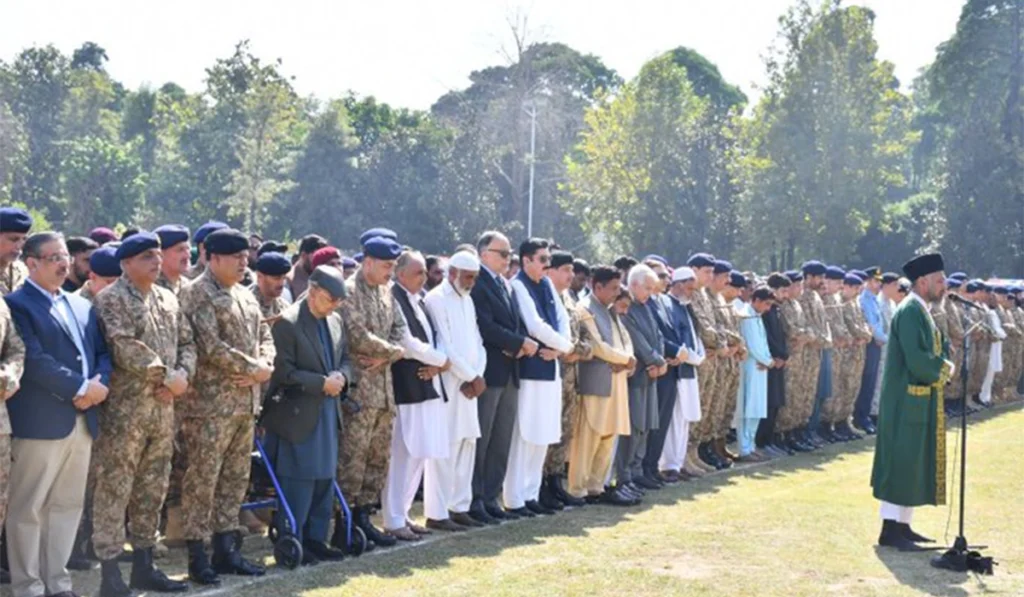
Pakistan’s military and civilian leadership gathered Monday to pay final respects to twelve servicemen who lost their lives defending the nation’s sovereignty during a cross-border confrontation with Afghan Taliban forces and affiliated militant groups.
The funeral prayers, held at Chaklala Garrison in Rawalpindi, drew senior government and military officials, including Defence Minister Khawaja Asif, Chief of Army Staff Field Marshal Asim Munir, and Khyber Pakhtunkhwa Governor Faisal Karim Kundi, according to the Inter Services Public Relations (ISPR).
Border Confrontation Details
The deadly encounter unfolded overnight between October 11 and 12 along the Pakistan-Afghanistan border, when Pakistani positions came under coordinated assault. The attack resulted in 23 soldiers killed and 29 others wounded while defending their posts against the aggression.
Pakistani forces responded with precision strikes targeting militant camps and training facilities inside Afghan territory. Military officials confirmed that retaliatory operations successfully neutralized over 200 Taliban-affiliated militants, significantly degrading their operational capabilities.
National Leadership Vows Strong Defense
Addressing the funeral ceremony, Defence Minister Khawaja Asif emphasized the nation’s unwavering commitment to protecting its territorial integrity and honoring the sacrifice of its defenders.
“The people of Pakistan owe an immense debt to these heroes who made the ultimate sacrifice while defending our homeland against cowardly aggression from the Taliban regime and terrorist proxies reportedly sponsored by India operating from Afghan soil,” Asif stated.
He reinforced that Pakistan’s armed forces remain fully prepared to counter any threats to national security with complete public support.
Pakistan Issues Stern Warning
The ISPR released a comprehensive statement Sunday detailing the losses sustained and the effectiveness of Pakistan’s military response, which forced hostile elements to withdraw from their positions.
Military authorities issued an unambiguous warning that Pakistan reserves the right to defend its citizens through continued neutralization of terrorist targets if the Afghan Taliban administration fails to act against militant organizations using Afghan territory as a safe haven.
The Ministry of Foreign Affairs reinforced this position, declaring that “any further provocations would be met with an unwavering and befitting response.”
Regional Context and Future Outlook
The cross-border violence occurred while Afghanistan’s interim foreign minister was reportedly visiting India, raising questions about regional dynamics and coordination among hostile elements.
Pakistani officials noted that following the swift and decisive military response, the Afghan Taliban regime sought an immediate ceasefire through intermediaries from two Gulf states, demonstrating the effectiveness of Pakistan’s countermeasures.
Pakistan also expressed hope for Afghanistan’s political future, stating that the Afghan people deserve a truly representative government that serves their interests and maintains peaceful relations with neighboring countries.
Military Preparedness Maintained
Pakistan’s security establishment has made clear its determination to protect national borders and civilian populations from cross-border terrorism. The country continues to maintain heightened vigilance along the western frontier while calling on the Afghan interim administration to fulfill its obligations to prevent militant groups from operating on its soil.
The sacrifice of the fallen soldiers underscores the ongoing security challenges Pakistan faces and the dedication of its armed forces to defending the nation’s sovereignty and territorial integrity.
