
Table of Contents
Pakistan Issues Stern Warning Over India’s Threat to Block Indus River Waters
As tensions between nuclear-armed rivals India and Pakistan spiral, Pakistan’s top military spokesperson has issued a chilling warning: any Indian attempt to block Pakistan’s share of water from the Indus River system would trigger long-term consequences, potentially destabilising the region for generations to come.
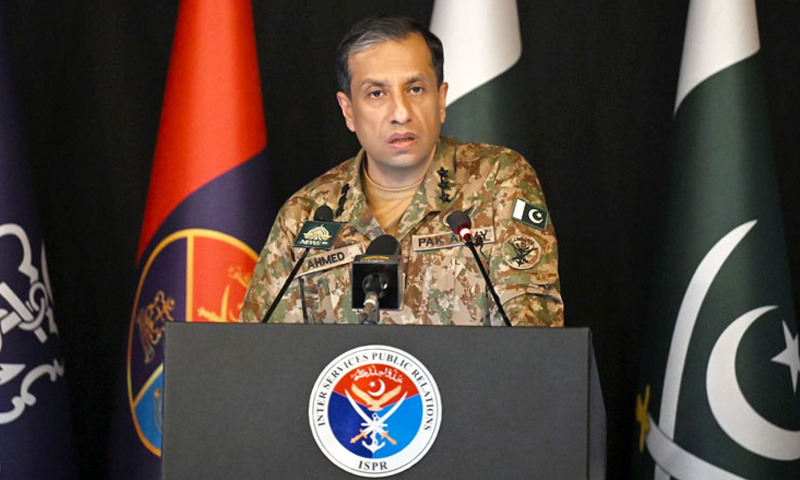
Speaking in an interview with Arab News, Director General of the Inter-Services Public Relations (DG ISPR), Lt Gen Ahmed Sharif Chaudhry, responded to Indian Prime Minister Narendra Modi’s announcement to cut Pakistan’s water share. “It is some madman who can think that he can stop water of 240 million plus people of this country,” said Chaudhry.
Indus Waters Treaty Suspended: A Dangerous Escalation
India’s unilateral suspension of the 1960 Indus Waters Treaty (IWT) last month sent shockwaves across the region. The treaty, brokered by the World Bank, had long served as a rare example of cooperation between the hostile neighbours, even during times of war.
New Delhi’s move came after a terrorist attack in Indian Illegally Occupied Jammu and Kashmir (IIOJK) that killed multiple tourists — an incident India blamed on Pakistan. Islamabad strongly denied involvement, but the incident provided the pretext for India to suspend the treaty, previously considered nearly sacrosanct.
Cross-Border Strikes and the Role of the Ceasefire
Following the fallout, India initiated military strikes on the night of May 6–7, targeting alleged militant hideouts along the Line of Control (LoC) and even extending its offensive into mainland Pakistan. In response, Pakistan retaliated by launching strikes on 26 Indian military positions, avoiding civilian targets. A US-brokered ceasefire came into effect on May 10, pausing the confrontation — temporarily.
According to Pakistani officials, at least 40 civilians were killed during India’s air raids, including 22 women and children. Pakistan, in its retaliation, maintained what it described as a professional and calibrated military response, targeting only military infrastructure and avoiding collateral damage.
“Nobody Dare Stop Water of Pakistan” – DG ISPR
Lt Gen Ahmed Sharif Chaudhry reiterated that weaponising water is a red line. “I hope that time doesn’t come, but it will be such actions that the world will see and the consequences of that we will fight for years and decades to come. Nobody dare stop water of Pakistan,” he stated.
Water is a critical issue for Pakistan, a country that depends on the Indus River system for over 80% of its agricultural and domestic needs. Any disruption to this flow, experts warn, could trigger a humanitarian and ecological disaster.
Pakistan Claims Indian Losses in the Recent Conflict
Chaudhry also revealed new details about the military confrontation, claiming that India lost six aircraft, including French-made Rafale jets and a Russian S-400 air defence system.
“Earlier, reports suggested five aircraft losses, but I can confirm that the sixth aircraft is a Mirage 2000,” said the DG ISPR. “We only targeted the aircraft. We could have taken out more, but we showed restraint.”
FDA Approves Novavax COVID Vaccine With Restrictions
If confirmed, the loss of an S-400 system — one of the most advanced air defence systems in the world — would be a serious blow to Indian military capabilities and pride, especially considering its strategic importance in the region.
Ceasefire Holding, But Fragile
Despite the current lull in direct hostilities, Chaudhry noted that both nations have accused each other of ceasefire violations since the truce began. However, he reaffirmed Pakistan’s commitment to upholding the ceasefire, stating:
“Pakistan armed forces are a professional armed forces and we adhere to the commitments that we make… If any violation occurs, our response is always there, but it is only directed at those posts and those positions from where the violations of the ceasefire happen. We never target civilians.”
Underlying Issue: The Kashmir Conflict
While the water dispute and military strikes dominate headlines, Lt Gen Chaudhry stressed that the Kashmir issue remains the core problem fueling hostilities.
“Their policy on Kashmir is not working,” he said. “Till the time Indians don’t sit and talk about Kashmir… the conflict potential is there.”
India’s revocation of Article 370 in 2019, which stripped IIOJK of its special constitutional status, has been met with fierce resistance from Pakistan. The current military and diplomatic crisis appears to be an extension of that long-standing dispute.
Global Stakes: A Call for International Mediation
The recent exchange of military strikes and the threat of a water war have raised concerns among global powers. With two nuclear-armed states involved, any escalation risks triggering a catastrophic regional or even global crisis.
Analysts and diplomats are urging both nations to return to the negotiating table, particularly to renegotiate or reaffirm the Indus Waters Treaty with third-party mediation, possibly by the World Bank or the United Nations.
