
Table of Contents
NASA Administrator Jared Isaacman called on the world to “start believing again” as he unveiled an ambitious new roadmap Tuesday, March 24, that commits the agency to building a permanent $20 billion lunar base and launching a nuclear-powered spacecraft to Mars by the end of 2028 .
“This is the moment where we should all start believing again,” Isaacman declared at NASA’s “Ignition” event in Washington, D.C. “NASA once changed everything, and we’re going to do it again” .
Moon Base: A Three-Phase, $20 Billion Commitment
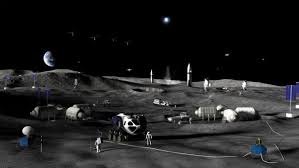
The centerpiece of the new strategy is a permanent lunar base that would support long-term human presence on the Moon’s surface. The project will be built through dozens of missions over the next seven years at a cost of approximately $20 billion .
Isaacman outlined a three-phase approach :
| Phase | Focus | Key Elements |
|---|---|---|
| 1 | Build, Test, Learn | Robotic landers, rovers, power systems, communications infrastructure |
| 2 | Early Infrastructure | Semi-habitable structures, regular astronaut visits, JAXA pressurized rover |
| 3 | Long-Duration Presence | Permanent habitats, cargo landers, Italian Space Agency habitats |
To achieve these goals, NASA plans to increase robotic lunar landings to as many as 30 per year starting in 2027, delivering science payloads, rovers, and technology demonstrations to prepare the surface for human arrival .
Lunar Gateway Paused, Components Repurposed
In a significant shift, NASA announced it is pausing development of the Lunar Gateway, a planned space station in lunar orbit that was largely already built with international partners . Instead, existing Gateway hardware will be repurposed for the surface base .
“It should not really surprise anyone that we are pausing Gateway in its current form and focusing on infrastructure that supports sustained operations on the lunar surface,” Isaacman said .
The decision leaves uncertain the future roles of Japan, Canada, and the European Space Agency—key partners who had agreed to provide components for the orbital station. ESA Director Josef Aschbacher said he would study the new plans .
Nuclear Mars Mission: SR-1 Freedom
NASA also disclosed plans to launch Space Reactor-1 Freedom, the first nuclear-powered interplanetary spacecraft, to Mars before the end of 2028 . The mission will demonstrate nuclear electric propulsion in deep space—technology that promises to cut travel time by at least 25% and enable high-power missions beyond Jupiter .
The SR-1 Freedom spacecraft will carry the Skyfall payload, deploying three Ingenuity-class helicopters to explore the Martian surface . This builds on the success of the original Ingenuity helicopter, which flew with NASA’s Perseverance rover in 2021 .
“We are finally putting nuclear propulsion on a trajectory out of the laboratory and into deep space,” said Amit Kshatriya, NASA’s associate administrator .
Geopolitical Context and Timeline
Isaacman framed the accelerated timeline as a response to China’s space ambitions. The United States aims to return astronauts to the Moon before the end of President Trump’s term—ahead of China’s planned 2030 crewed lunar landing .
The Artemis II mission, carrying astronauts around the Moon, is scheduled for as soon as April 1, 2026. The first crewed lunar landing since Apollo 17 is now targeted for 2028 during Artemis IV and V missions .
“The clock is running in this great-power competition, and success or failure will be measured in months, not years,” Isaacman warned .
Skepticism and Challenges
While the vision is ambitious, experts expressed skepticism about feasibility. Astrophysicist Katie Mack noted the “dominant reaction is somewhere on the spectrum between mockery and dismay,” citing the tight 2028 timeline for nuclear propulsion development .
Isaacman acknowledged the challenges, telling employees: “Few disagree with the direction we are taking, but many question the achievability” . He warned contractors of “uncomfortable action” if they underperform .
“The moon base will not appear overnight,” Isaacman said. “But we will build it through dozens of missions” .
