
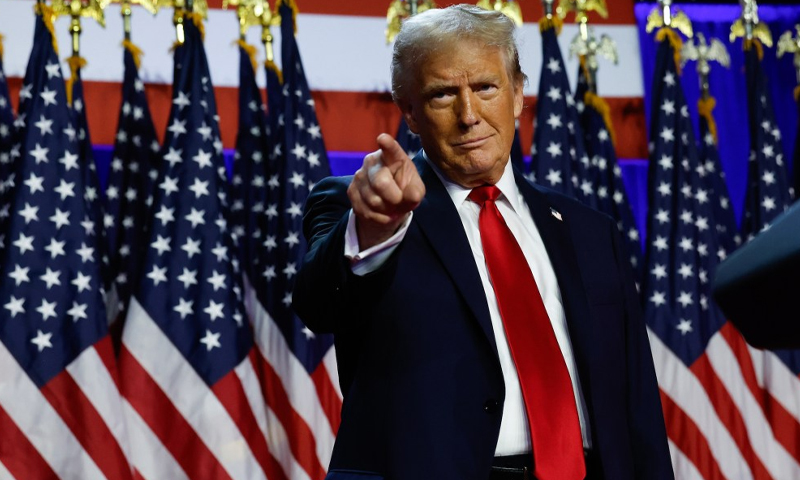
In a contentious debate over U.S. immigration policy, President-elect Donald Trump has publicly expressed his support for the H-1B visa program. The program, which allows highly skilled foreign workers, particularly in tech fields, to work in the United States, has become a focal point for debate within the Republican Party. This came after a series of public comments from Trump and tech entrepreneurs, including Tesla CEO Elon Musk, who argue for the expansion of the program. However, this stance has ignited fierce opposition from traditional anti-immigration conservatives who believe the program undermines American workers.
Trump’s Support for the H-1B Visa Program
Trump, speaking to The New York Post on Saturday, reiterated his long-standing support for the H-1B visa program. “I’ve always liked the (H1-B) visas, I have always been in favor of the visas, that’s why we have them” at Trump-owned facilities, Trump said in his first public comments on the issue since it gained national attention earlier this week. His remarks aligned him with Silicon Valley tech leaders like Elon Musk, who have long been vocal proponents of the program, arguing that it is essential for the United States to remain competitive on the global stage.
This endorsement marks a significant moment in the ongoing immigration debate, as it signals a potential shift from Trump’s previous, more hardline stance on immigration. While Trump has been a strong advocate for curbing illegal immigration and reducing overall immigration levels, his comments on the H-1B program suggest a more nuanced approach when it comes to attracting highly skilled foreign workers.
Elon Musk’s Influence on the Debate
Elon Musk, a prominent figure in the tech world and a supporter of Trump’s political agenda, has also weighed in on the issue. Musk, who himself entered the U.S. on an H-1B visa, posted on social media platform X (formerly Twitter), calling for the U.S. to attract elite engineering talent from abroad to maintain its competitive edge. “Luring elite engineering talent from abroad is essential for America to keep winning,” Musk wrote, emphasizing the critical role that foreign-born talent plays in the success of American tech companies.
Musk’s comments have drawn attention to a growing divide between traditional Republican viewpoints and those of the tech elite. While many conservative figures and voters have expressed concerns about immigration policies, Musk’s position underscores the importance of a highly skilled workforce for innovation and global competitiveness.
The Rise of Vivek Ramaswamy and His Impact
Vivek Ramaswamy, an entrepreneur and political figure with ties to Musk, has also been vocal in supporting the expansion of the H-1B visa program. Ramaswamy, who is set to co-chair a government cost-cutting panel under Trump, argued that the U.S. education system is failing to produce enough highly skilled graduates to meet the demands of industries like tech. Ramaswamy, the son of Indian immigrants, has been outspoken about the need for more highly skilled workers to ensure that the U.S. does not fall behind countries like China in technological advancement.
Ramaswamy’s comments have intensified the debate, particularly with his assertion that American culture “venerates mediocrity,” which he believes could ultimately undermine the nation’s standing as a global leader. This statement, however, has drawn sharp criticism from conservatives who feel that the U.S. should prioritize American workers and limit immigration, especially in light of high unemployment rates in certain sectors.
Conservative Backlash and the Growing Divide
The debate over the H-1B visa program has sparked a backlash among some of Trump’s traditional conservative supporters, who argue that bringing in more foreign workers would hurt American workers. Figures like Laura Loomer, a far-right MAGA activist, have criticized Trump for aligning with tech billionaires like Musk, warning that he risks losing support from his base. Loomer and others argue that Trump should focus on policies that protect American workers and reduce immigration, rather than promoting programs that could potentially lead to job displacement for U.S. citizens.
Steve Bannon, a former Trump strategist and staunch anti-immigration voice, has also criticized Musk’s position, calling the H-1B program a “scam” that brings in foreign workers who are paid less than their American counterparts. Bannon’s criticism of Musk was particularly pointed, calling the Tesla CEO a “toddler” in a direct jab at his influence on the immigration debate. This exchange highlights the deepening divide within the Republican Party over the issue of immigration and the role of big tech in shaping policy.
The Potential for a “MAGA Civil War”
The war of words between Musk, Bannon, and other conservatives has led to what some are calling a “MAGA civil war.” Musk’s firm stance on immigration reform, combined with his significant financial backing of Trump’s campaign, has positioned him as a key figure in the debate. Musk even warned that he was ready to “go to war” over the issue, suggesting that the growing divide within the Republican Party could have long-term consequences for Trump’s political agenda.
At the same time, many conservatives are concerned that Trump’s support for the H-1B program could alienate his base, which overwhelmingly supports stricter immigration policies. This internal strife within the MAGA movement underscores the challenges Trump will face in navigating the complex issue of immigration reform once he takes office in January.
Trump’s Dilemma: Balancing Big Tech and Conservative Support
As Trump prepares to assume office, the debate over immigration reform, especially the H-1B visa program, is likely to remain a key issue. Trump’s support for the program, which has been championed by tech elites like Musk and Ramaswamy, may help him build relationships with Silicon Valley but could also alienate a significant portion of his conservative base.
The question now is whether Trump’s stance on the H-1B program will lead to a smoother transition into office or whether it will deepen the divisions within his party. With tensions running high between traditional Republicans and tech entrepreneurs, the coming months may reveal whether Trump can reconcile these competing factions and push forward with a cohesive immigration policy that satisfies both sides.
