
Table of Contents
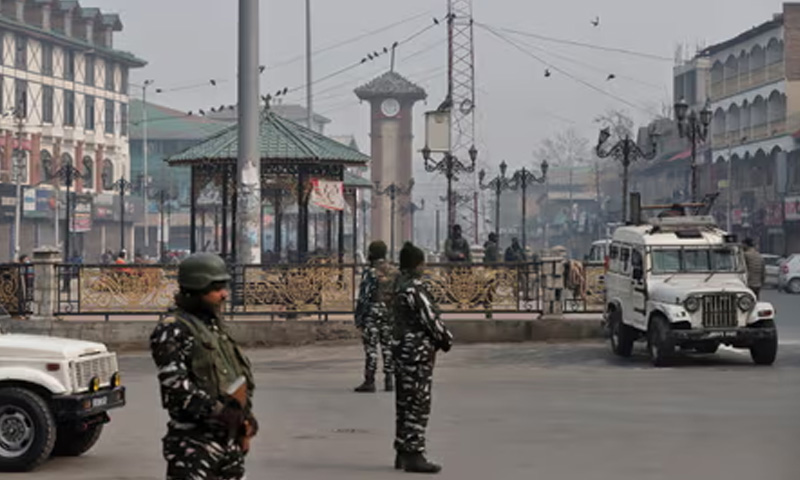
In a move that has ignited controversy and sparked anger among Muslim leaders and local residents, Indian police in the disputed region of Jammu and Kashmir (IIOJK) have raided several bookstores and seized hundreds of copies of books authored by Abul Ala Maududi, a prominent Islamic scholar. The raids, which began on Saturday, have caused uproar among supporters of Maududi’s political party, Jamaat-e-Islami, which was banned by India’s Hindu-nationalist government in 2019.
The bookshops, primarily located in Srinagar and other towns in the region, were targeted after Indian police cited “credible intelligence” regarding the clandestine sale and distribution of literature that allegedly promotes the ideology of Jamaat-e-Islami. Though the police did not immediately name the author of the seized materials, store owners confirmed that the works of Maududi were among those confiscated.
Maududi’s Legacy and Jamaat-e-Islami’s Ban
Abul Ala Maududi, the founder of Jamaat-e-Islami, was a highly influential Islamic scholar and political thinker, whose ideas have had a significant impact on the Muslim world. His political philosophy, which sought to establish an Islamic state based on Sharia law, was controversial but widely respected among various Islamic communities.
In 2019, India’s government banned the IIOJK branch of Jamaat-e-Islami, labeling it an “unlawful association.” The Indian government claimed that the group’s activities were a threat to the security, integrity, and sovereignty of the nation. This move was part of a broader crackdown on political dissent in Jammu and Kashmir, which culminated in the revocation of the region’s special constitutional status in August 2019. Since then, restrictions on civil liberties have intensified, and the region has witnessed an ongoing crackdown on political, religious, and social activism.
The ban on Jamaat-e-Islami was renewed in 2020, with India justifying it as necessary to prevent activities deemed harmful to national security. The government argued that Maududi’s ideology, as disseminated through his writings, posed a risk to the country’s sovereignty. The current raids on bookstores are seen as a direct extension of this policy, aimed at suppressing the spread of literature associated with Maududi’s teachings.
Seizure of Islamic Literature Sparks Outrage
The raids have generated strong reactions from various quarters, particularly from Muslim leaders and supporters of Jamaat-e-Islami. Local bookshop owners in Srinagar reported that plainclothes officers arrived at their stores and confiscated all copies of books written by Abul Ala Maududi. A bookstore owner, speaking anonymously to AFP, described the situation, stating, “They came and took away all the copies of books authored by Abul Ala Maududi saying these books were banned.
”Qatar to Invest $10 Billion in India Across Key Sectors to Strengthen Bilateral Relations
Police officials have defended their actions, claiming that the literature found in the bookstores was in violation of legal regulations and promoting the ideology of a banned organization. A police statement confirmed that the raids were conducted to prevent the circulation of literature associated with Jamaat-e-Islami, which the government argues is a threat to national security. The police also warned that strict actions would be taken against those found in possession of such materials.
Religious Leaders Condemn Police Actions
The raids have been condemned by several religious leaders in Jammu and Kashmir, who view the seizure of Islamic literature as a violation of intellectual freedom and a further attack on the region’s Muslim identity. Umar Farooq, the chief cleric of IIOJK and a prominent advocate for the region’s right to self-determination, voiced his outrage at the police actions. Farooq labeled the seizure of Maududi’s books as “ridiculous,” emphasizing that the literature was widely available online and accusing the authorities of trying to stifle thought and expression.
“Cracking down on Islamic literature and seizing them from bookstores is ridiculous,” Farooq said in a statement. “Policing thought by seizing books is absurd — to say the least — in the time of access to all information on virtual highways.”
Shamim Ahmed Thokar, another supporter of Jamaat-e-Islami, also spoke out against the raids, stating that the seized books promoted values such as good moral conduct and responsible citizenship. He expressed disbelief that literature that advocated for positive societal values was being targeted and confiscated.
Political and Civil Liberties Under Scrutiny
The ongoing crackdown in IIOJK has sparked increasing concern over the erosion of political and civil liberties in the region. Since the Indian government imposed direct rule on Jammu and Kashmir in 2019, the region’s political landscape has been significantly altered. The removal of the region’s autonomy has led to widespread protests and condemnation, both domestically and internationally. Critics of the Indian government argue that the continued suppression of political expression, religious freedom, and access to knowledge is further deepening the grievances of the Kashmiri population.
The seizure of books, a clear attack on intellectual freedom, has only intensified the perception that the Indian government is suppressing not only political dissent but also the fundamental right to access information and express ideas. The act of raiding bookstores and confiscating literature represents a growing authoritarian trend, wherein the state seeks to control not just the political sphere but also the cultural and intellectual landscape.
The Bigger Picture: Jammu and Kashmir’s Future
These events are part of a broader and ongoing struggle for the people of Jammu and Kashmir, who continue to face both political repression and religious persecution under Indian rule. With the region under military occupation and its political leaders imprisoned or silenced, the future of Jammu and Kashmir remains uncertain.
For many in the region, including the supporters of Maududi and Jamaat-e-Islami, the banning of books and the repression of intellectual thought represents a deliberate attempt to erase their cultural and religious identity. The controversy surrounding the raids on bookstores is emblematic of the larger conflict over the region’s status, autonomy, and the freedom of its people to think, speak, and express themselves without fear of state retribution.
As the situation continues to evolve, it remains to be seen how the people of Jammu and Kashmir will respond to this latest violation of their rights. What is clear, however, is that the battle for intellectual freedom and political expression in the region is far from over.
