
Table of Contents
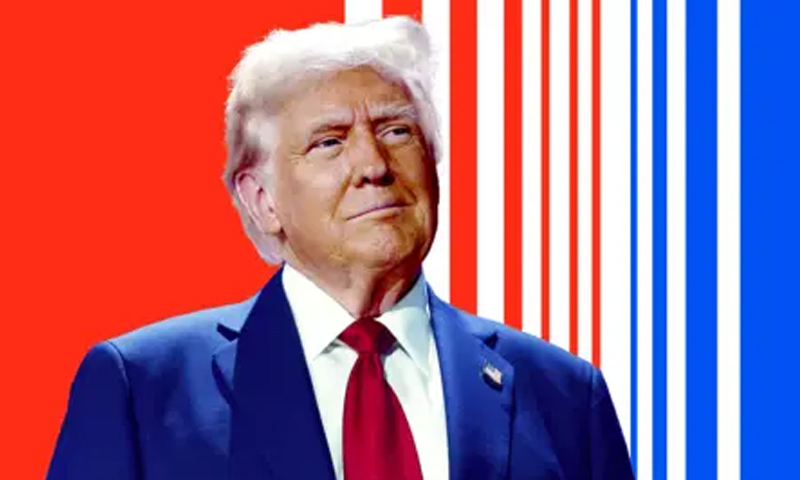
In a striking revelation during a Fox News interview following his tour of the Middle East, former U.S. President Donald Trump declared that he personally prevented an imminent nuclear war between India and Pakistan — a conflict he called one of the most dangerous in recent memory.
After wrapping up multibillion-dollar trade deals in Saudi Arabia, Qatar, and the UAE, Trump claimed he intervened diplomatically to mediate rising tensions between the South Asian rivals, describing the episode as “the biggest success” he has ever been given credit for.
Unverified Conflict Sparks Trump’s Diplomatic Push
According to Trump, the conflict originated from a military escalation triggered by India’s unprovoked offensive against Pakistan following the alleged Pahalgam incident in Indian-administered Jammu and Kashmir on May 6. The Indian government, without providing concrete evidence, reportedly launched strikes deep into Pakistani territory.
In retaliation, Pakistan claimed it shot down six Indian fighter jets — including advanced Rafales — neutralized an S-400 missile defense system, and allegedly hacked critical Indian military systems. Though largely unverified internationally, these claims painted a picture of Pakistan’s military superiority in the face of Indian aggression.
Shehbaz offers peace talks after ‘winning war’ against India
The developments raised alarm across global capitals, with fears of full-scale war, including the possible use of nuclear weapons.
Trump’s Intervention: From Hotline to Trade Diplomacy
Trump stated that he immediately sprang into action, directing Secretary of State Marco Rubio to contact Indian leadership and simultaneously urging Pakistan to show restraint. In a matter of hours, backchannel diplomacy helped restore hotline communication between the two nuclear-armed states, resulting in a surprise ceasefire agreement.
“The next step was going to be something catastrophic. The N-word — nuclear — was being whispered,” Trump told the Fox News host. “It’s the worst thing that can happen. They were very, very close.”
The former president emphasized that trade was his key tool in diffusing the crisis. “I said we are going to talk about trade. I am using trade to settle scores and make peace,” he explained.
Praise for Pakistan Amid Tough Talk on India
Trump also took a moment to reflect on his relationship with Pakistan, commending its people and their potential as trade partners. “They are brilliant people. They make incredible products. And we don’t do much trade with them,” he said, suggesting the time was ripe to reset the U.S.-Pakistan relationship based on commerce rather than solely counterterrorism cooperation.
In contrast, Trump didn’t shy away from criticizing India’s trade practices. Despite the $129 billion trade volume between the U.S. and India in 2024, he complained of high tariffs and trade imbalances. “India is one of the highest tariff nations in the world. They make it almost impossible to do business,” he remarked, reiterating that Delhi must open its markets more to U.S. businesses.
Sharif and Munir Lauded for Pakistan’s Strategic Posture
Trump’s remarks come as a surprise win for Pakistan, which has historically struggled to shift its image from a security-dependent partner to a competitive economic ally. The diplomatic handling of the crisis also drew praise from within the country.
Prime Minister Shehbaz Sharif and Chief of Army Staff General Asim Munir were credited for calm yet assertive leadership during the confrontation. Their military planning and national resilience reportedly shocked Indian military planners and raised Pakistan’s stature on the global stage.
Foreign Minister Ishaq Dar also received commendation for his diplomatic finesse, coordinating efforts across key embassies — including those in Washington, the United Nations, the UK, Saudi Arabia, Turkiye, and Iran.
A Strategic Opportunity for Pakistan
While the Trump-led U.S. played a balancing role in the standoff, analysts warn that Pakistan should not become complacent. Despite the recent praise, the United States continues to see India as a strategic counterweight to China, and this alliance is unlikely to diminish soon.
Nevertheless, experts argue that Islamabad must seize this diplomatic momentum to pursue enhanced economic cooperation with the U.S. — potentially under a future Trump administration. Strengthening ties through trade, technology, and infrastructure investment could help diversify Pakistan’s global partnerships and reduce its reliance on crisis-driven diplomacy.
